


Blog
7 Marine PLC Components Every Ship Engineer Needs

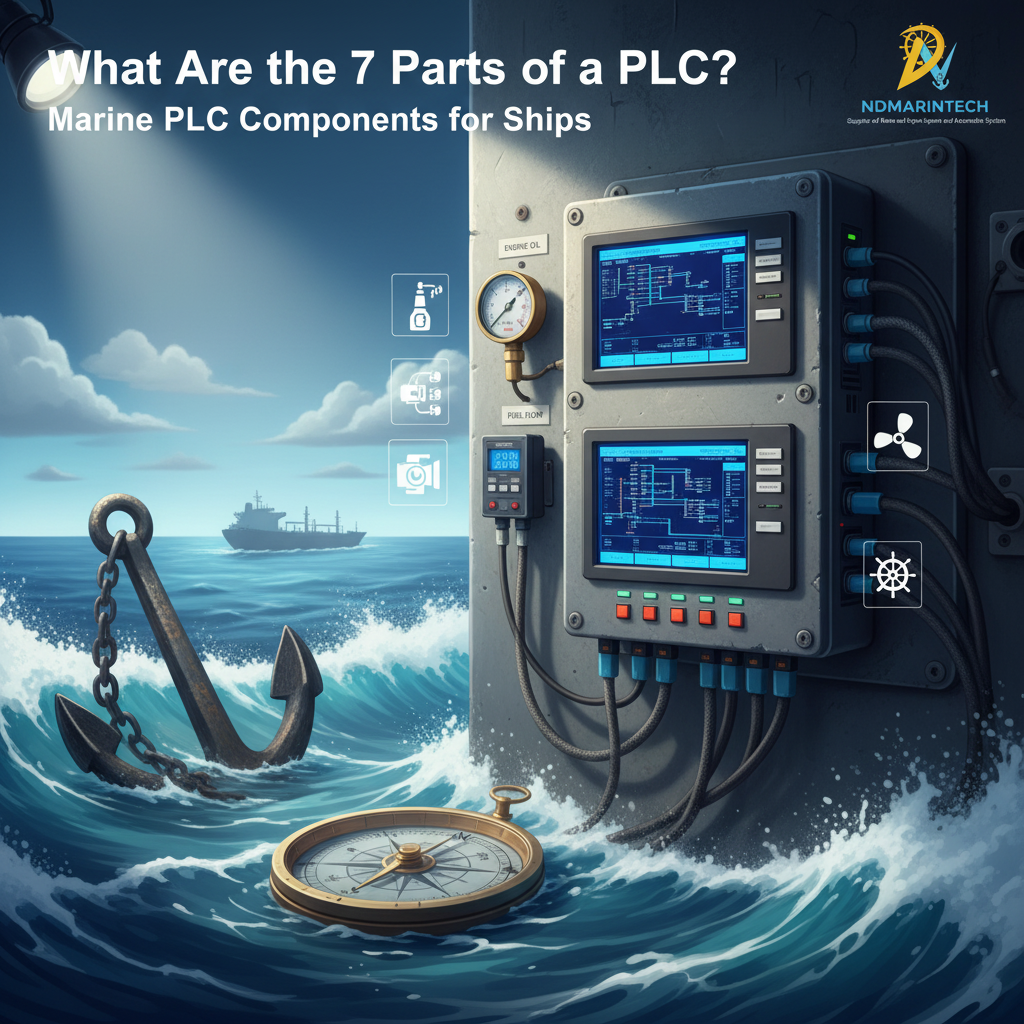
Imagine yourself on the broad sea, with waves pounding against the side of your ship and engines humming steadily below deck. Then a storm hits, and everything depends on the PLC, or Programmable Logic Controller, to keep your ship’s systems working smoothly. Marine PLC parts and PLC component maritime systems are more than simply technology; they are lifelines that keep sailors safe and stop tragedies from happening in the harsh world of marine operations. This article goes into great detail about the seven most important parts of a PLC and real-life applications in marine environments.
Know PLCs in Marine Environments
In the late 1960s, PLCs changed the way factories controlled things by replacing big, cumbersome relay panels with clever, programmable brains. They are now essential on ships for automating everything from keeping an eye on the engines to controlling the ballast. Imagine how relieved a skipper must feel knowing that the PLC is carefully controlling the gasoline pumps in rough seas—no mistakes, just accuracy.
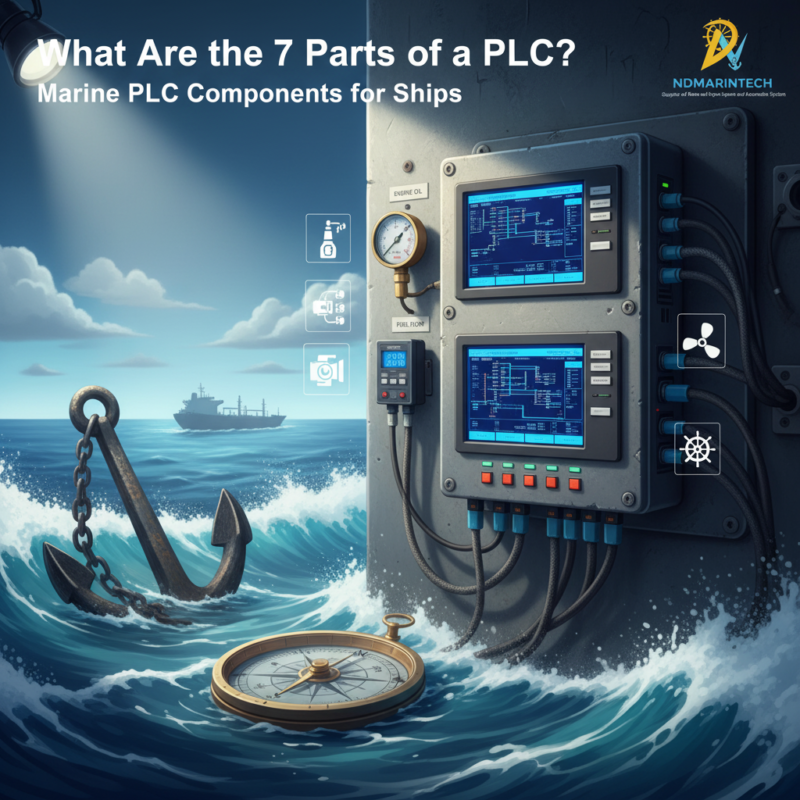
What sets marine PLC parts apart from the rest? They’re tough: they can handle vibrations, water (typically rated IP67), and meet maritime certification standards like DNV-GL or Lloyd’s Register. These PLC parts can handle temperatures from -40°C to 70°C, frequent shaking, and salty air that would ruin gear on land.
In marine situations, PLCs are in charge of important functions like controlling propulsion, keeping the crew comfortable with HVAC, and putting out fires. If they don’t work, they might save lives and cargo worth millions. Heart racing? Of course, but that’s what makes engineering reliability so exciting when it matters most.
1. Power Supply: The Heart of Marine PLCs
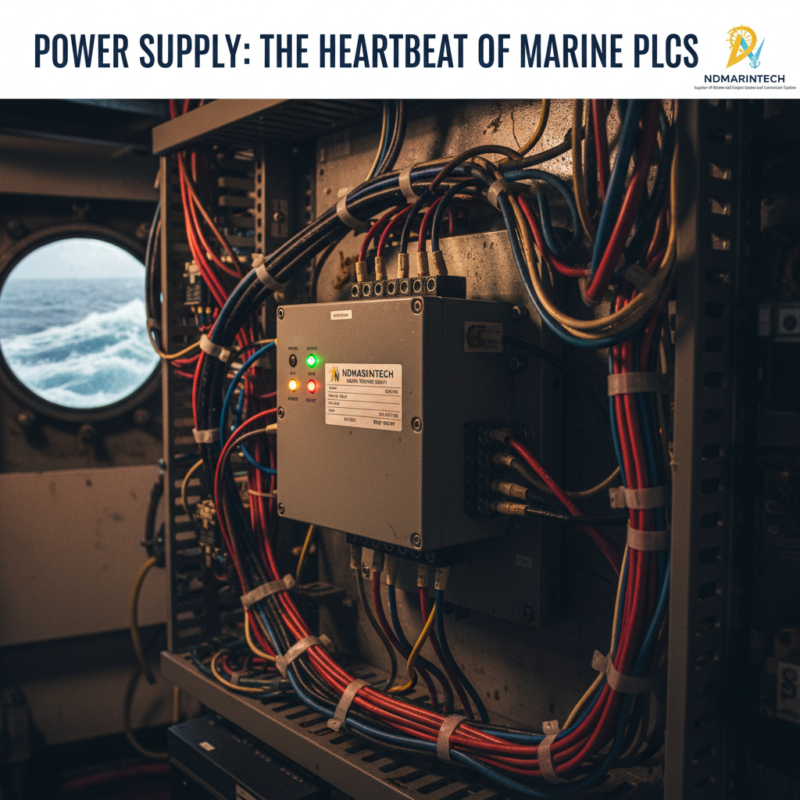
The power supply is the unsung hero. It takes the ship’s raw electricity, which is usually 24V DC or 440V AC, and turns it into steady DC voltage for the PLC’s internal parts. It stops everything, like a ship losing its generators in a blackout.
This item is protected from voltage spikes from lightning or engine surges in marine PLC parts by employing switched-mode power supply (SMPS) that work well with 24V DC and have low ripple. Marine-grade ones have fusing, EMI filtering, and a broad input range (90–264V AC) so they can handle power changes on ships.
When a conventional supply fails because of humidity, it’s really frustrating. Marine versions use conformal coatings and enclosed enclosures. Redundancy is quite important for ships. Dual supplies make sure that if one fails, the other will take over, which gives you piece of mind on extended trips.
These devices provide power to the CPU and I/O modules, with a load rating of 3 to 16 amps. A stable power supply means no panicking in the engine room when the boiler controls or thruster systems go down.
2. Central Processing Unit (CPU): The Ship’s Brain
The PLC’s command center is the CPU. It runs ladder logic or function block programs at lightning speed, with millions of instructions per second. It has the automation logic for your ship, which tells it when to change the rudders or sync the generators.
For PLC components ship, CPUs like the Siemens S7-1200 or DEIF AMC 300 are marine-hardened. They can handle shocks of up to 50G, vibrations, and programming in IEC 61131-3 languages like Ladder Diagram and Structured Text. They use sensors to get real-time data and make decisions about ballast or propulsion in a single second.
Watching a CPU handle a sudden list adjustment makes me excited. The valves open just right, keeping the ship stable. But those who aren’t ready will suffer; non-marine CPUs get too hot or stop working when they get wet. Marine ones include longer temperature ranges and safety features that are certified for dangerous areas.
These CPUs are small enough to fit in cramped engine rooms and have PID loops that let you control boiler pressure or pump speeds with great accuracy. They turn rough seas into smooth cruises.
3. Memory: Keeping the Ship’s Secrets Safe
A PLC’s memory stores your programs, data tables, and scan results. RAM is used for running programs, and EEPROM/Flash is used for permanent storing. If you lose it, your ship goes back to being a mess.
Marine PLC parts need memory that can hold on to data even when the power is out, and they need error-correcting code (ECC) to protect against radiation or EMI from radars. Ships keep huge files of things like fuel levels, vibration data, and alarm history. In modern systems, these logs can be up to gigabytes.
The worry of data getting messed up in the middle of the ocean? Marine memory uses tough NAND flash that lasts for more than 10 years and is protected from vibrations. It keeps variables even after reboots, which is important for things like syncing generators.
Memory snapshots diagnostics for shore-side analysis in practice, saving time and difficulty with troubleshooting. It’s the quiet archive that makes sure you follow IMO rules.
4. Input Modules: Feeling the Sea’s Rage
Input modules connect the PLC to the real world by changing signals from sensors, like thermocouples for engine temperatures, pressure transducers for hydraulics, and proximity switches for door status.
Marine seals on ships’ PLC components ship inputs keep saltwater from getting in and keep noise from motors from getting through. They safely scale harsh signals for both analog (4–20mA for tank levels) and digital (fire/smoke detectors) signals.
Engineers feel better when inputs correctly show that a bilge pump has failed in the middle of waves, with no false alarms from corrosion. Screw or spring clamps are used to make connections that won’t shake loose on rugged terminals.
High-density modules (16–64 points) fit on packed panels and work with NAMUR sensors for explosive atmospheres in fuel areas.
5. Output Modules: Controlling Ship Systems
For example, outputs turn PLC decisions into action by using relays for starters, triacs for lights, and analog for valve actuators. They’re the muscles that make the pump run or the alarm go off.
Marine PLC component outputs shine with surge protection and short-circuit proofing against lightning or shorts. Solid-state models don’t arc in humid engine rooms and are fused for safety.
Joy in observing outputs precisely sequence cargo pumps – load balances exactly, no leaks. Marine compliance requires SIL-rated outputs for safe operations in propulsion.
They operate high-power loads with an external power source (24V DC field) and have diagnostics for open wires to stop silent breakdowns.
6. Communication Interfaces: How to Connect Ship Systems
Comms modules let HMIs, SCADA, or several PLCs connect to each other by Ethernet, Profibus, or Modbus. They connect bridge controls to engine PLCs on ships.
EtherCAT for real-time communication, OPC UA for cybersecurity, and all fiber optics for EMI immunity are some of the tough ports that PLC components ship with. Marine certs make sure that no one failure may bring down the network.
The delight of being connected? Remote diagnostics from shore, which cuts down on downtime. Extra rings keep cable damage from causing blackouts.
Protocols work with VDRs or ECDIS to keep logs for audits.
7. The strong frame is the rack/chassis and backplane
The rack holds modules and the backplane moves power and data. It’s the frame, which is commonly installed on a DIN rail.
Maritime PLC parts racks in maritime installations are made of stainless steel, have an IP66 rating, and are shock-mounted. It can grow, and the hot-swappable modules cut down on downtime.
Proud that the backplane can handle 25G bumps without breaking the data flow. Cooling fins or fans take care of the heat from I/O clusters.
Why Marine-Specific PLC Parts Matter
Standard PLCs falter at sea; marine ones conquer with coatings, seals, and certs. Costs more upfront but saves fortunes in repairs.
| Feature | Standard PLC | Marine PLC Parts |
|---|---|---|
| Temp Range | 0-60°C | -40-70°C |
| Vibration | 5G | 50G shock |
| Protection | IP20 | IP67, saltwater-proof |
| Cert | Industrial | DNV, ABS |
| Redundancy | Optional | Standard dual |
Real-Life Ship Uses
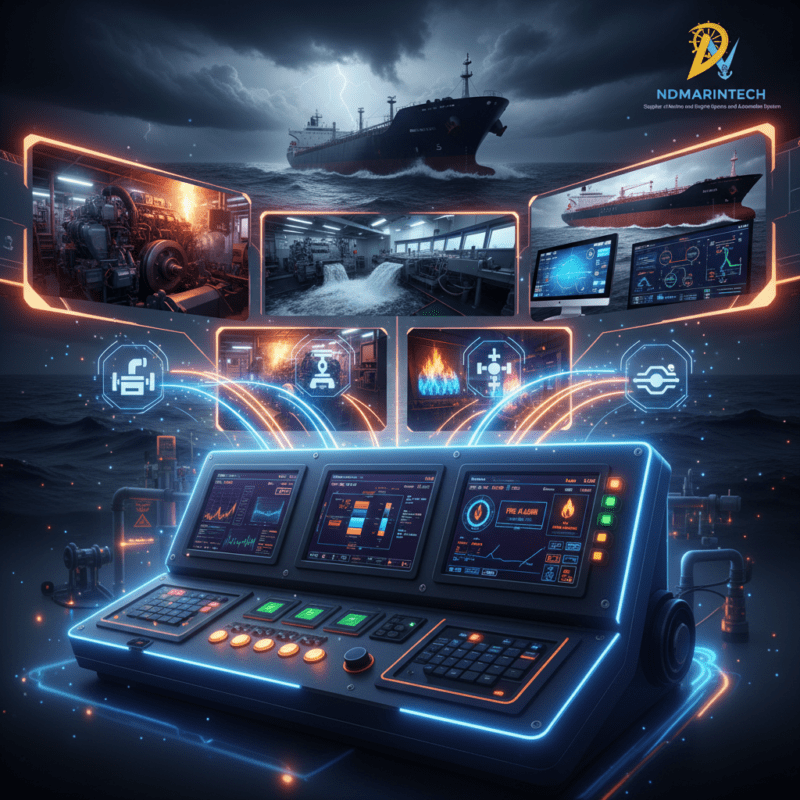
- Engine room automation: Monitors engines, generators, and fuel—autostarts, speed control, and overspeed protection for cargo ships.
- Fire/smoke detection: Activates alarms, CO2 release, and ER lockdowns on tankers via sensor inputs.
- Generator load sharing: Sequences starting and balances electricity between gensets on cruise ships to prevent blackouts.
- Cargo pump control: Controls tank loading/unloading, flow, and pressure on oil tankers to prevent overflow.
- Ballast management includes adjusting tanks for trim and stability on bulk carriers, as well as counter-flooding during lists.
- Boiler PID control optimizes combustion and water levels on vessels equipped with Siemens S7 systems.
- HVAC automation regulates crew comfort temperatures and humidity levels aboard superyachts and freighters.
- Power management (PMS): Handles shore power and hybrid operations on docked ferries to reduce pollution.
- Fuel tank stability: Maintains CG on navy ships using level sensors and geometry calculations.
- Tank/battery monitoring: Monitors levels, SOC, and auto-shutdowns on yachts via HMI alarms.
- Wastewater processing: Monitors compliance flows on various merchant boats.
- ER lighting/switches: Touchscreen control via Modbus on commercial ships.
Regards,
Zainali F. Bhojani (CE)
Author