


Blog
Critical 2-Stroke Marine Engine Components: When to Replace

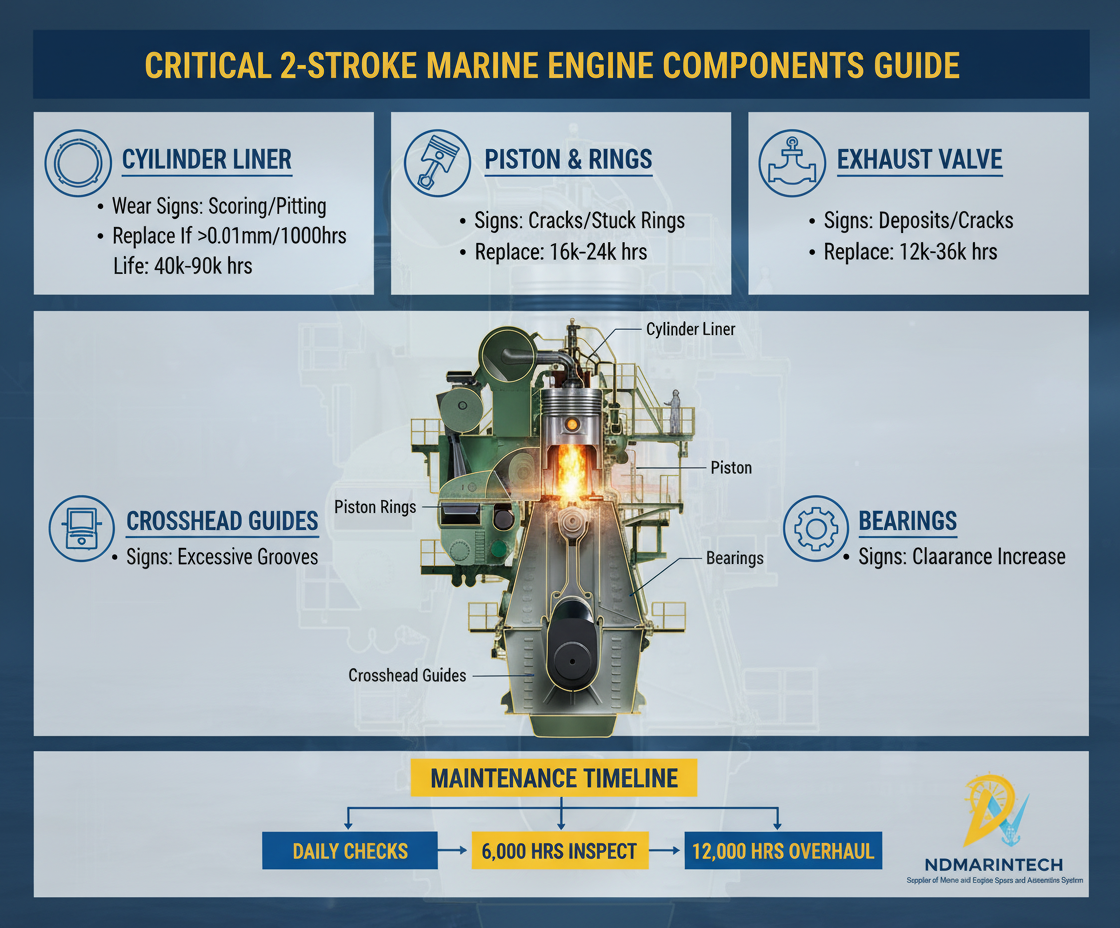
Components such as the cylinder liner, piston, and exhaust valve undergo severe circumstances, and neglecting their wear can result in disastrous consequences – from abrupt power loss to catastrophic failure during operation, transforming a typical journey into a nightmare of repairs and delays. This guide simplifies the intricacies with practical insights, illustrating precisely when to identify issues and replace components to ensure your engine operates reliably and your crew remains safe.
Why Proactive Replacement Matters
Ignoring wear can cause huge problems like scavenge fires or seized pistons, which cost millions in repairs and downtime. Regular checks every 12,000 to 16,000 hours find problems early on, which can add 40,000 to 90,000 hours of life to parts, depending on the quality of the fuel and how the machine is used. Imagine how good it feels to have smooth sailing after a sensible overhaul.
Cylinder Liner
The cylinder liner makes the piston’s sealed path, which fights acid corrosion and friction from combustion.
Signs of Wear and When to Replace
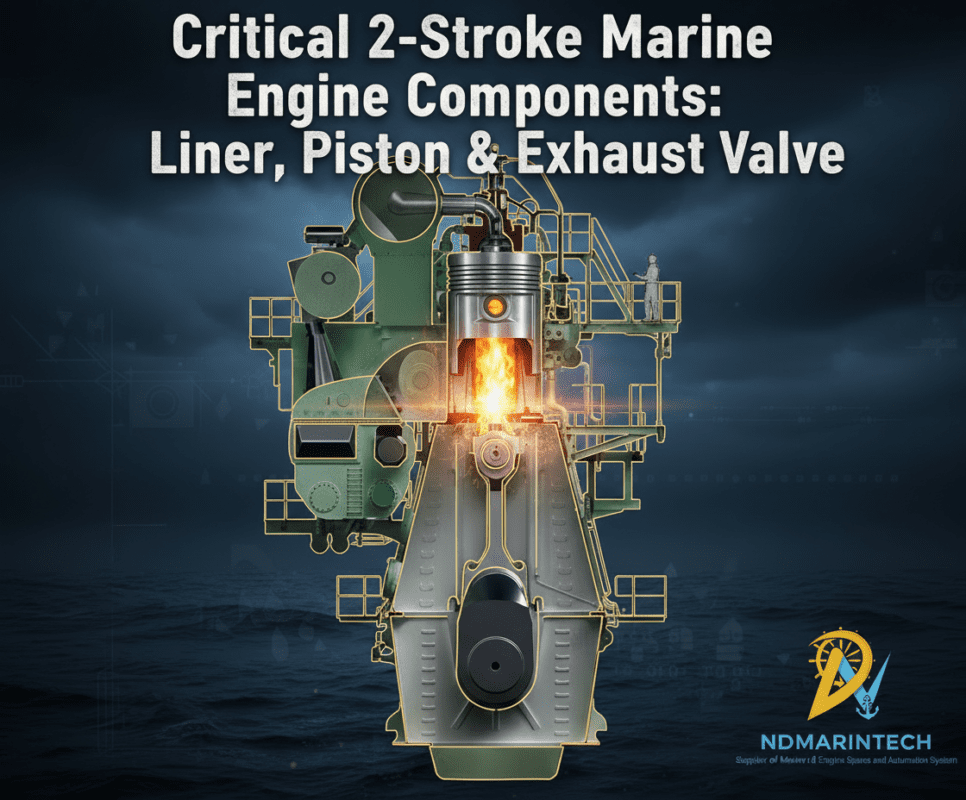
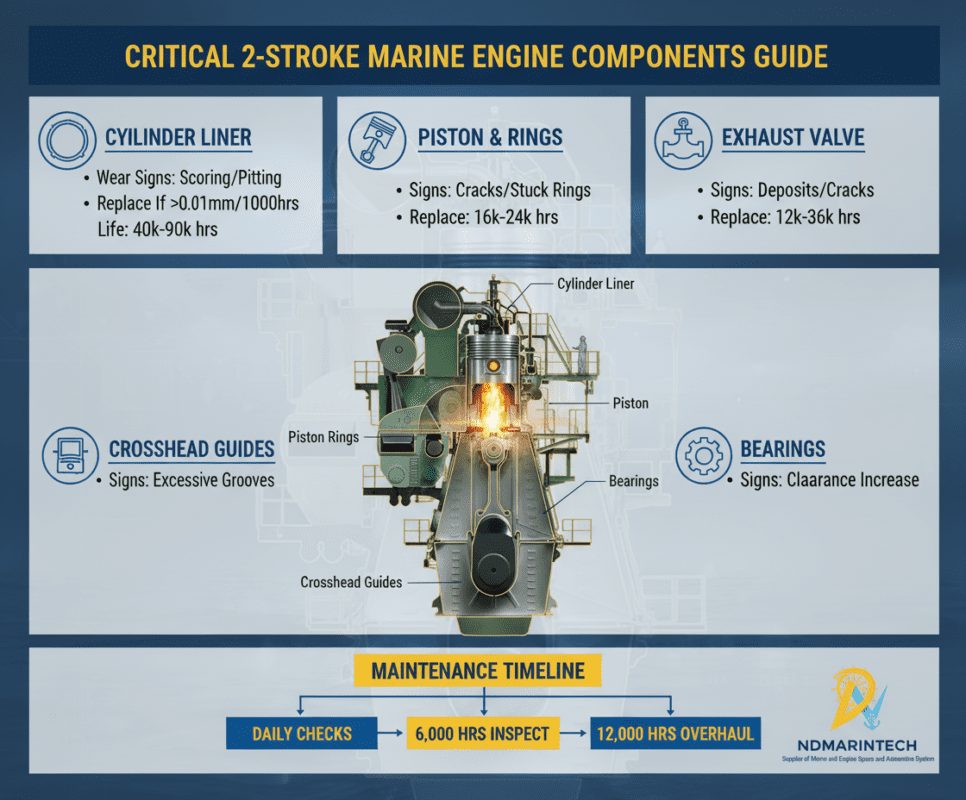
Check for scoring, pitting, cracks, or too much ovality. Measure the wear rates and replace the part if they go beyond 0.01 mm/1000 hours or the liner diameter goes over the limitations. Less power, blue exhaust smoke, or surging indications are all signs of difficulty that make you feel like you’re about to fail.
Common Lifespan and Maintenance Tips
You should expect 40,000 to 90,000 hours of use. You should check it with a borescope or gauge every 12,000 to 16,000 hours. Lightly hone it for reuse, but replace it if the performance lowers. I’ve felt proud of a liner that was just gauged and was humming flawlessly.
Piston and Piston Rings
Pistons turn explosive force into thrust, and rings seal the compression and scrape the oil. The rings are chrome-plated to last longer.
Finding Damage to the Piston
If you see cracks on the crown from hot areas, skirt scoring, or ring groove wear, you need to respond right away. Loss of compression means rough idling and power decreases.
How to Change Piston Rings?
If the rings get caught, the chrome peels, or the butt gaps get bigger, switch them out. For large bores, the lifespan is 16,000 to 24,000 hours. When oil burns, blue smoke hits like a betrayal. To get that satisfying seal, wipe the grooves properly during an overhaul.
| Component | Key Wear Signs | Replacement Threshold | Typical Life (hours) |
|---|---|---|---|
| Piston Crown | Cracks, erosion | Visual cracks or hotspots | 20,000-40,000 |
| Piston Rings | Stuck, excessive gap | Axial wear > spec, Cermet <0.05mm | 16,000-24,000 |
| Skirt | Scoring from side thrust | Deep grooves | Match liner life |
Exhaust Valve
This hero valve opens just right to let gases out and turns to get rid of deposits in uniflow scavenging.
Common Ways to Fail
Deposits cause sticking, while hotspots produce cracks on the tapered head. Listen for strange noises or check the lift indications. It’s frustrating when the exhaust flow is interrupted and power drops; poor rotation speeds up corrosion.
Timing for Maintenance and Swapping
Every 6,000 to 12,000 hours, clean it; if it’s dented or not sealing, replace it every 12,000 to 36,000 hours. Checking your oil regularly will keep your valves from seizing up in the middle of the ocean.
Other Important Parts
Crosshead Guides and Piston Rod
Guides take the side thrust, and if the grooves wear out too much, they need to be replaced, which is typically related to the life of the piston. If stuffing box scrapers are worn, they leak oil. Four-stage rings need to fit perfectly to recover the crankcase.
Bearings (Main and Crankpin)
When journal faults cause more clearance, it’s time to change. Check for cracks or overheating every 6,000 to 8,000 hours. That metal sound? Just pure fear till it was replaced.
| Bearing Type | Inspection Interval | Replace If |
|---|---|---|
| Main/Crankpin | 6,000-8,000 hrs | Clearance > spec, cracks |
| Crosshead | With piston overhaul | Excessive wear |
Maintenance Best Practices
Follow the maker’s schedule: check the temperatures and vibrations every day, and do major repairs at key points. Use high-quality lubricants to keep things from wearing out. The happiness of a watchful routine? More trips and less surprises.
When it’s time for a big change
- Loss of power or surging
- High temperatures or smoke coming from the exhaust
- Vibration spikes
- Oil use goes up
Thanks and Regards,
Mr. Zainali Bhojani (CE)