


Blog
Top 5 Marine Automation Failures & Prevention | Ndmarinetech

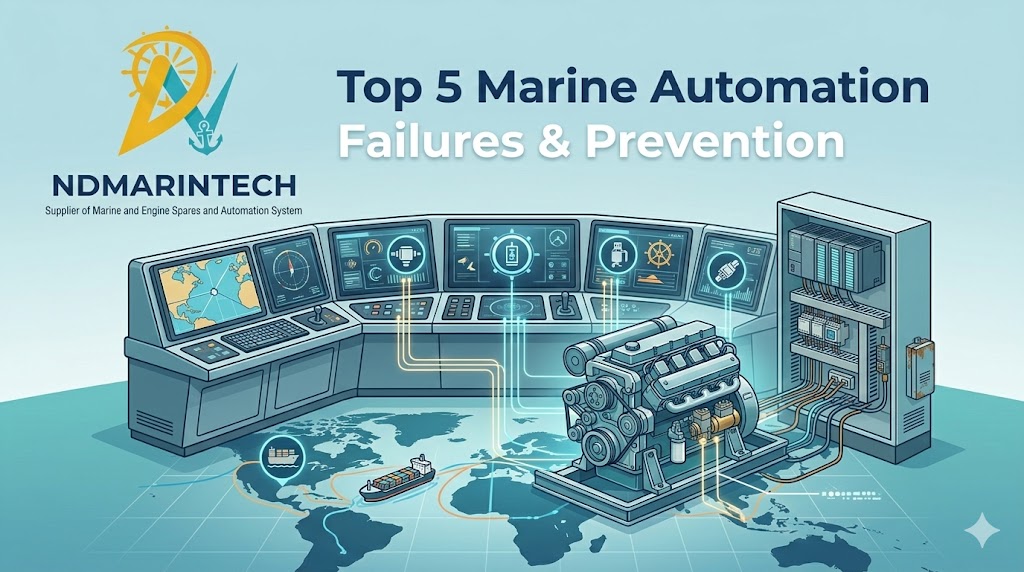
Common Marine Automation System Failures & Preventive Maintenance
In the middle of the ocean, “automation” is the crew member you can’t see who keeps the engines running and the lights on. But when that unseen crew member fails, the results can be anything from costly downtime to real marine emergencies.
We’ve observed where the wires intersect and the sensors fail at Ndmarinetech. Here are the top five mistakes people make with automation and how to keep your ship on course.
The Five Worst Automation Problems at Sea (and How to Avoid Them)
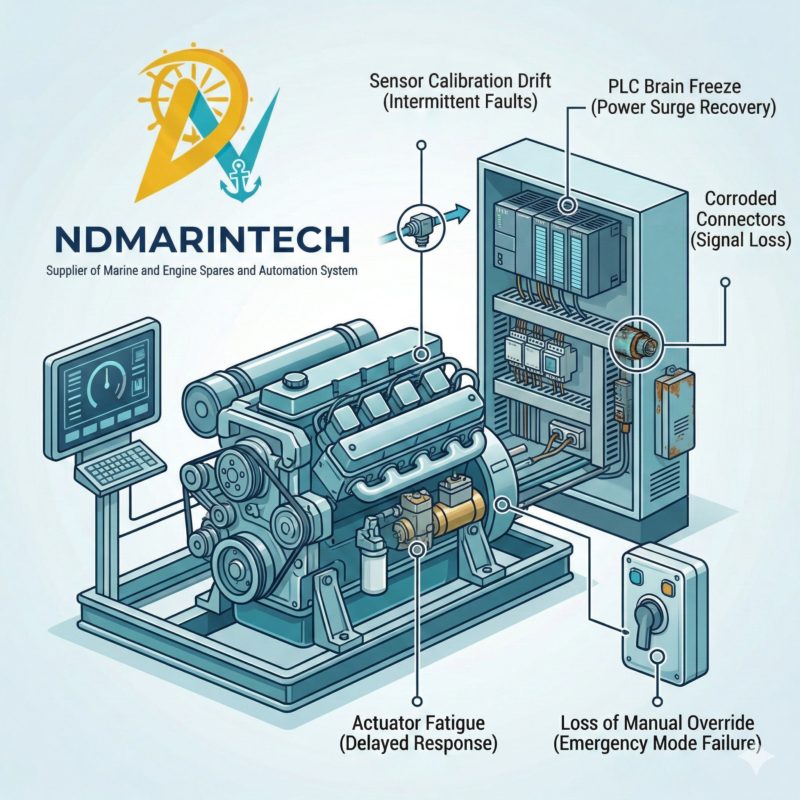
1) The Ghost in the Machine: Sensor Calibration Drift
The “eyes” of your engine room are the sensors that measure pressure and temperature. Over time, exposure to excessive heat and vibration generates drift, which is when the sensor says the liner temperature is 85°C, but it is actually 95°C.
The Fix: Don’t wait for an alarm. Do a Master Gauge comparison every three months. Replace a sensor if it drifts more than 2% before the drift becomes a problem.
2) Power changes can cause PLCs to brain freeze
Programmable Logic Controllers (PLCs) are the brains behind shipboard automation. But marine power systems are known for having dirty voltage spikes. A small power spike during a generator switchover can mess up a PLC’s memory or burn out its I/O modules.
The Fix:
Make sure your automation cabinets have a high-quality marine-grade UPS (uninterruptible power supply) and surge suppressors behind them. When your machines have clean power, they work better.
3) Corrosion: The Quiet Killer of Connections
Electronics don’t like salt air. We regularly observe automation problems that aren’t caused by a broken item but by oxidation on terminal blocks and connectors that makes them hard to work with. A tiny piece of rust that costs 5 cents can stop an engine worth millions of dollars.
Solution: Use enclosures that are rated IP67 and clean all non-sealed connections with a marine-specific dielectric contact cleaner during every scheduled inspection.
4) Wear and tear on actuators in hydraulic systems
Your automation system tells the actuators what to do, and they do it. In a lot of marine systems, the feedback loop doesn’t work because the mechanical actuator has seals that have worn out or “stiction” (static friction). The machine claims the valve is closed, but the computer indicates it’s open.
Solution: Keep an eye on “Response Lag” in your automation logs. The actuator needs a rebuild kit right away if a valve takes 1.5 seconds longer to respond than it did six months ago.
5) Too Much Dependence on Auto Mode
The biggest failure isn’t necessarily technological; it’s when people stop watching over things. When crews stop checking automatic readings with physical sight glasses or manual sounding, they lose touch with the ship.
What to do: Do “Manual Mode” drills once a month. Make sure your workforce knows how to physically run the machinery and get around the automation. Technology is a tool, not a way to replace seamanship.
Conclusion: Getting Closer to Reliability
Marine automation is supposed to make sailing safer and more efficient; however, it is only as strong as the weakest part of it. These small technical flaws, such as a sensor that isn’t operating properly or a terminal that has rust on it, can make operations very difficult. By keeping up with maintenance and recognizing why systems fail, you can keep your spacecraft a precise machine instead of a liability. We at ndmarinetech.com are committed to providing you with the best marine engine parts and automation systems you need to keep your fleet moving forward without a doubt.
Regards,
Mr. Zainali Bhojani (CE)
Author