


Blog
How to Remove Crankshaft Pulley from Marine Engines: Step-by-Step Guide


A Step-by-Step Guide on Taking Off the Crankshaft Pulley from Marine Engines
Taking off the crankshaft pulley from a marine engine can be difficult, but it’s sometimes necessary for repairs or maintenance. The crankshaft pulley, which is also known as the damper pulley or harmonic balancer, is essential for decreasing vibrations and turning on other belts like water pumps and alternators. Pulleys may need to be removed for replacement, damage, or wear during an engine overhaul.
This complete tutorial will show you the safest and most effective ways to take off the crankshaft pulley from marine engines. It will list the items you need, provide you step-by-step directions, and give you ideas on how to get over frequent problems.
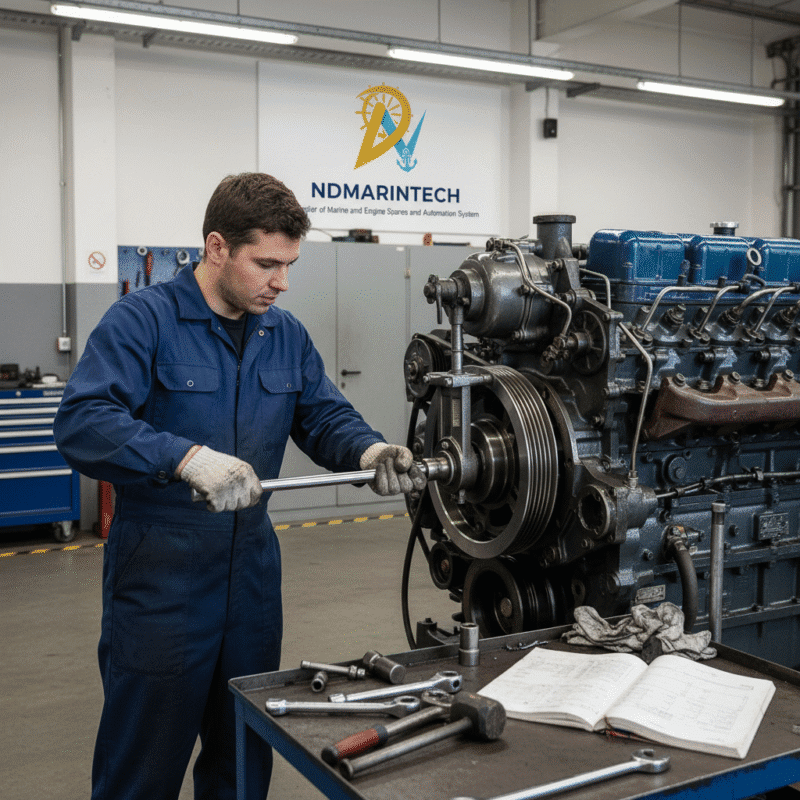
Why do you need to take off the crankshaft pulley?
Before you start removing the crankshaft pulley from a marine engine, it is important to understand the reasons for doing so:
- Replacing a harmonic balancer or pulley that is worn out or broken.
- You need to reach the timing chain or belt located behind the pulley.
- You will need to repair either the front engine seal or the crankshaft.
- Cleaning or taking care of the pulley and the parts around it.
Knowing what you need to do will help you get the right tools and follow the right safety rules.
Tools Needed for Crankshaft Pulley Removal
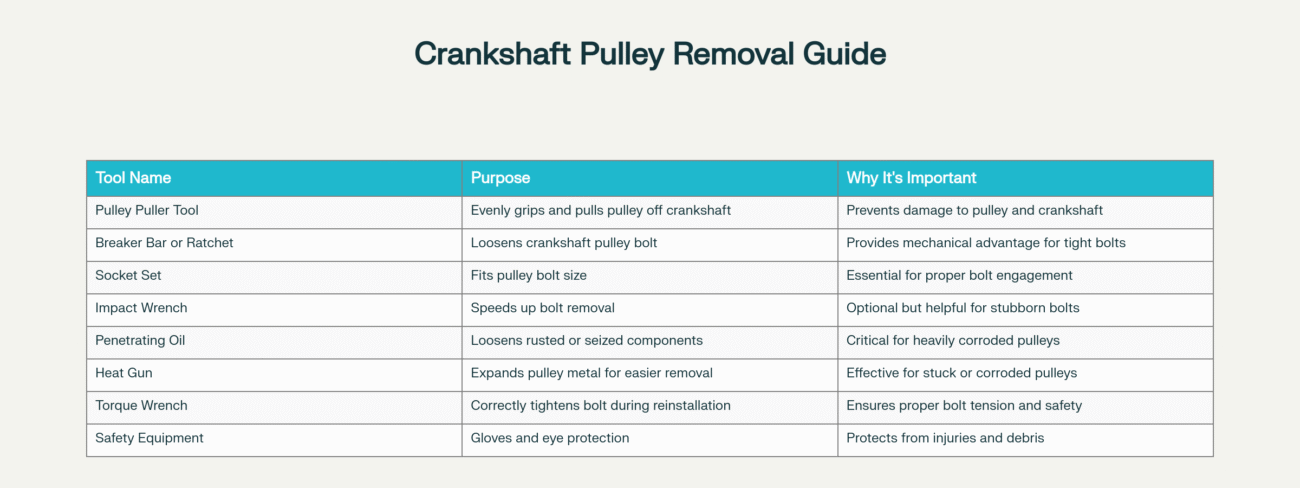
To remove the crankshaft pulley, you will need several tools depending on the engine type and pulley condition:
1) Pulley Puller Tool: A tool made just for pulling the pulley from the crankshaft without hurting it.
2) Use a breaker bar or ratchet to release the bolt on the crankshaft pulley.
3) Socket Set: To fit the size of the pulley bolt.
4) Impact Wrench (Optional): This tool can help you take off bolts faster, but you should be careful when using it on particular engines.
5) Penetrating Oil: To free up bolts or pulleys that are stuck or rusty.
6) Heat Gun: Use it to heat the pulley and make it bigger if rust or corrosion makes it stick.
7) Torque Wrench: To make sure the bolt is tightened appropriately when you put it back on.
8) Safety gear: gloves and eye protection.
Having the correct tools makes sure that the process goes smoothly and safely.
Step-by-Step Process To Remove Crankshaft Pulley
This is a full, step-by-step explanation on how to take off the crankshaft pulley from marine engines.
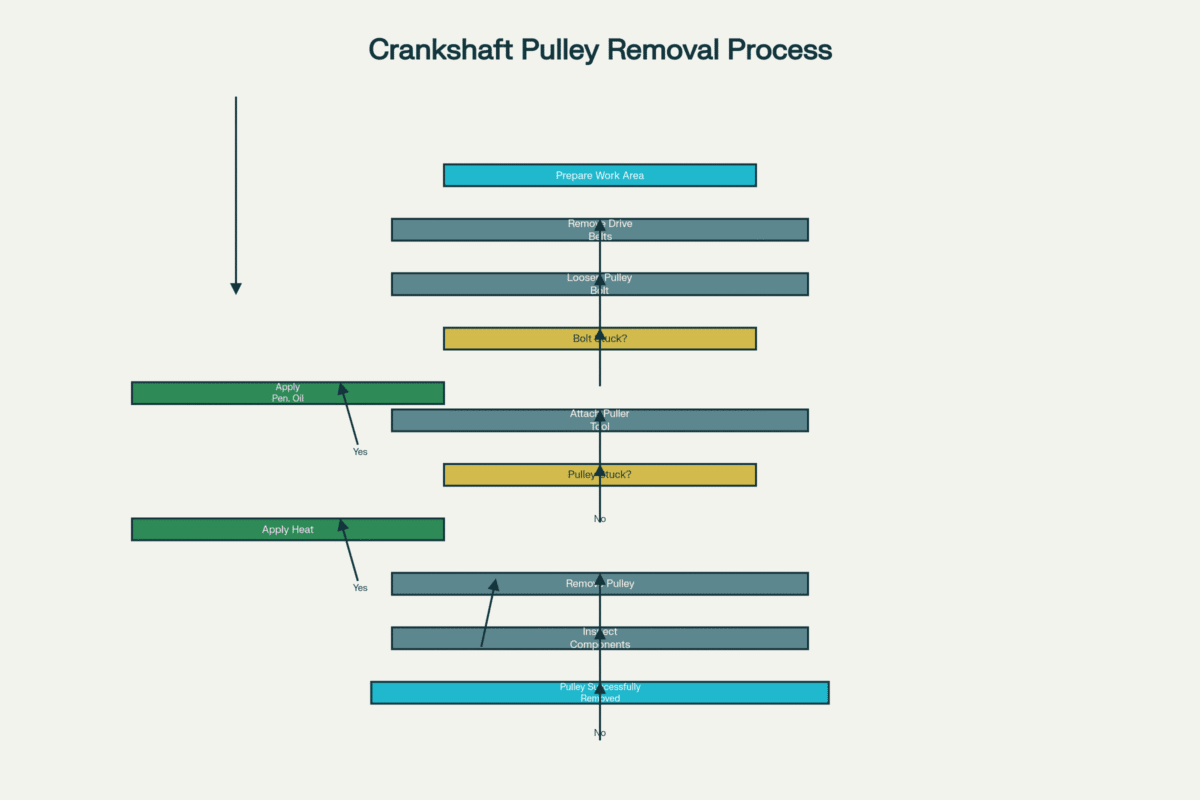
1) Safety First: Get the Work Area Ready
- Make sure the engine is off and has had time to cool down.
- To stop it from starting by accident, unplug the battery.
- Put on gloves and safety glasses.
- Clear away anything that is in the way of the pulley area.
2) Take off the drive belts
- Loosen and take off the drive belts that are linked to the crankshaft pulley.
- Make a note of or mark the belt path for when you put it back on.
3) Loosen the Bolt on the Crankshaft Pulley
- Use a breaker bar and a socket to release the big bolt that holds the pulley to the crankshaft.
- If the bolt won’t move, put penetrating oil on it and let it set.
- Some marine engines let you utilize the starter torque method, which means you take out the spark plugs or switch off the ignition so the engine doesn’t start. Then you use the starter motor to revolve the crankshaft while a breaker bar keeps the bolt still, which helps to loosen it.
- To keep the crankshaft from getting damaged, don’t use impact wrenches directly on the crankshaft pulley bolt on marine engines unless you’re told to.
4) Put on the Pulley Puller Tool
- Follow the manufacturer’s directions to attach the pulley puller tool to the pulley.
- Make sure it is perfectly situated so that the pulley doesn’t get hurt.
- While drawing the pulley outward, tighten the forcing screw on the puller so that it presses on the end of the crankshaft.
5) Take off the pulley
- Slowly crank the puller tool’s forcing screw with a wrench or ratchet.
- The pulley should begin to slide off the crankshaft.
- If it’s stuck because of rust or corrosion, cautiously use a heat gun to heat the area surrounding the pulley hub to make it a little bigger.
- If you need to, tap the pulley lightly with a gentle mallet.
- Don’t hit the pulley too hard or with a hammer, since this could break the harmonic balancer.
6) Inspect the pulley and its parts
- Once you take it off, look closely at the pulley, the crankshaft seal region, and the parts around it.
- If the pulley or seals are worn out or broken, you should replace them.
- Remove any corrosion or dirt from the end of the crankshaft.
Tips and Troubleshooting for Difficult Removals
1) If the pulley bolt is really tight or rusty, you can help by applying penetrating oil several times over the course of several hours or overnight.
2) Using a heat gun on the pulley makes the metal expand further and breaks the bonds of rust.
3) For more leverage, use a long breaker bar or torque multiplier.
4) Don’t use screwdrivers or pry bars since they could hurt the pulley or crankshaft.
5) If your engine has timing marks on the pulley, indicate its original location before taking it off so that you can keep the timing accurate when you put it back together.
Advice for Reinstalling
- Lightly grease the threads of the bolt before putting it back together.
- Make that the pulley is lined up with any timing or alignment marks.
- Use a torque wrench to tighten the pulley bolt to the engine manufacturer’s requirements.
- Follow the original routing and tension specifications to put the drive belts back on.
Verdict:
Any marine mechanic or do-it-yourselfer should know how to take off the crankshaft pulley from a marine engine. Even a tough pulley may be properly taken off without hurting important parts of the engine if you have the right tools, are patient, and know how to do it. Always put safety first, check parts carefully, and follow the manufacturer’s torque specifications when putting everything back together.
Thanks and regards,
Mr. Zainali Bhojani (CE)
Author