


Blog
How to Spot and Fix Crankshaft Wear in Diesel Engines – NDMARINETECH


How to Spot and Fix Crankshaft Wear in Diesel Engines?
Crankshaft wear is one of the most serious but generally avoidable problems that can happen with marine and industrial diesel engines. If you don’t fix journal scoring, misalignment, and oil starvation damage, these might cause your engine to fail completely and cost you a lot of time and money. This guide shows you how to check for problems, what causes them (particularly bad lubrication), and a straightforward overhaul process utilizing OEM-grade parts from trusted suppliers. It’s perfect for engineers and technicians who work on marine diesel powerplants.

Why crankshaft wear matters in diesel engines
The crankshaft turns the motion of the pistons into rotational torque, which moves huge loads through the main and connecting-rod journals. These parts work in marine diesel engines under high pressure, high temperatures, and typically continuous duty cycles, which makes them prone to wear, scoring, cracks, and misalignment.
When journals or fillets wear down too much, the clearances in the bearings get bigger, the oil pressure lowers, and the vibration goes up. This speeds up fatigue and puts the bearings at risk of seizing or breaking the crankshaft.
Common signs of crankshaft wear
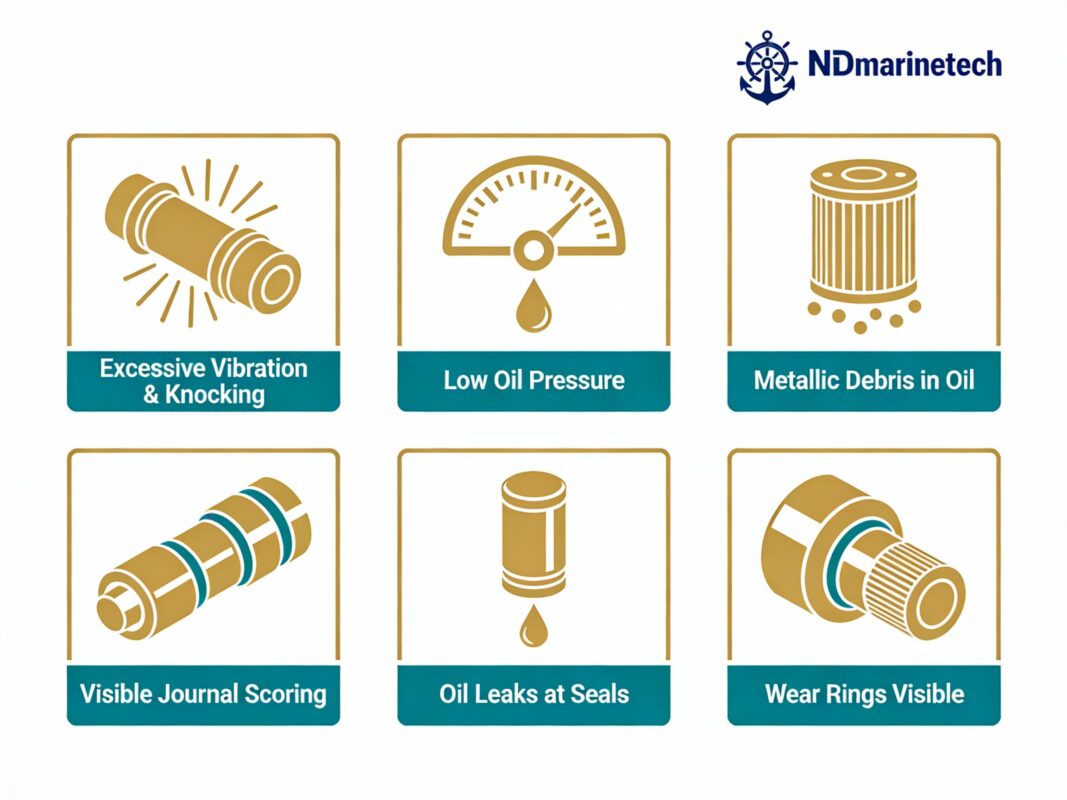
Routine crankcase checks can help find problems early and save thousands of dollars in repairs. Look out for these signs:
1) While the engine makes too much noise or vibration, especially while it’s under stress, it’s often because the journals are worn unevenly or out of position.
2) Even when the filters are clean and the viscosity is right, the oil pressure is low or changing. This means that the bearing clearances are bigger because the journals are worn.
3) Metallic debris or “shiny” particles in the oil filter or sump, which means the bearings or journals are wearing out.
4) During a crankcase inspection, you can see scoring, grooves, or discoloration on the main or rod journals.
5) Oil seeps from the front or back seal, and there is a noticeable wear ring on the crankshaft nose or seal journal.
Main causes of crankshaft wear
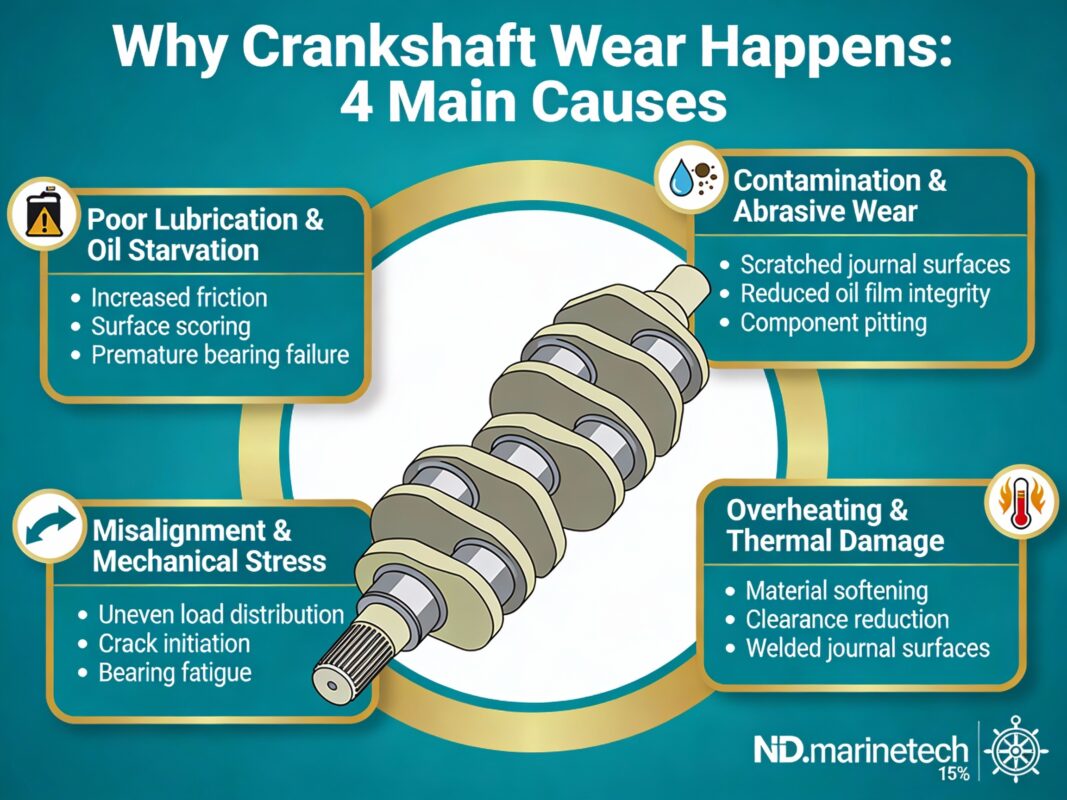
There are several things that might cause crankshafts to wear down, but most of the time, it’s because of lubrication problems and stress from use.
1) Lack of oil and bad lubrication
- Low oil level, improper viscosity, or damaged oil make the hydrodynamic coating thinner, which lets journals and bearings touch each other directly.
- Oil-starved bearings can cause overheating, scuffing, and faster journal wear. This can happen when oil passageways are blocked, pumps fail, or filters get unclean.
2) Dirty and rough wear
- Water, gasoline dilution, or dirt getting into the lubricating oil system adds more abrasive particles that slice journals and wear down bearing surfaces.
- In marine conditions, bad ventilation in the crankcase or air intake filtering can let in moisture and grit that are full of salt.
3) Not being in line, being out of balance, and putting stress on the machine
- Bending strains on the crankshaft are caused by misaligned engine mounts, coupling, or gearbox. This causes uneven wear and fatigue cracks.
- Overloading, rapid changes in load, or bad governor tuning put more torsional stress and shock loading on the crankshaft.
4) Getting too hot and getting damaged by heat
- Problems with the cooling system or lube-oil cooling can elevate the temperature of the journal, which softens the metal and causes scoring, galling, and heat-affected zones.
- Fixing the crankshaft is just as vital as fixing the problems that caused it to break.
How to inspect a diesel engine crankshaft?
A systematic inspection should follow the manufacturer’s instructions and, if possible, utilize tools and gauges that the manufacturer has approved.
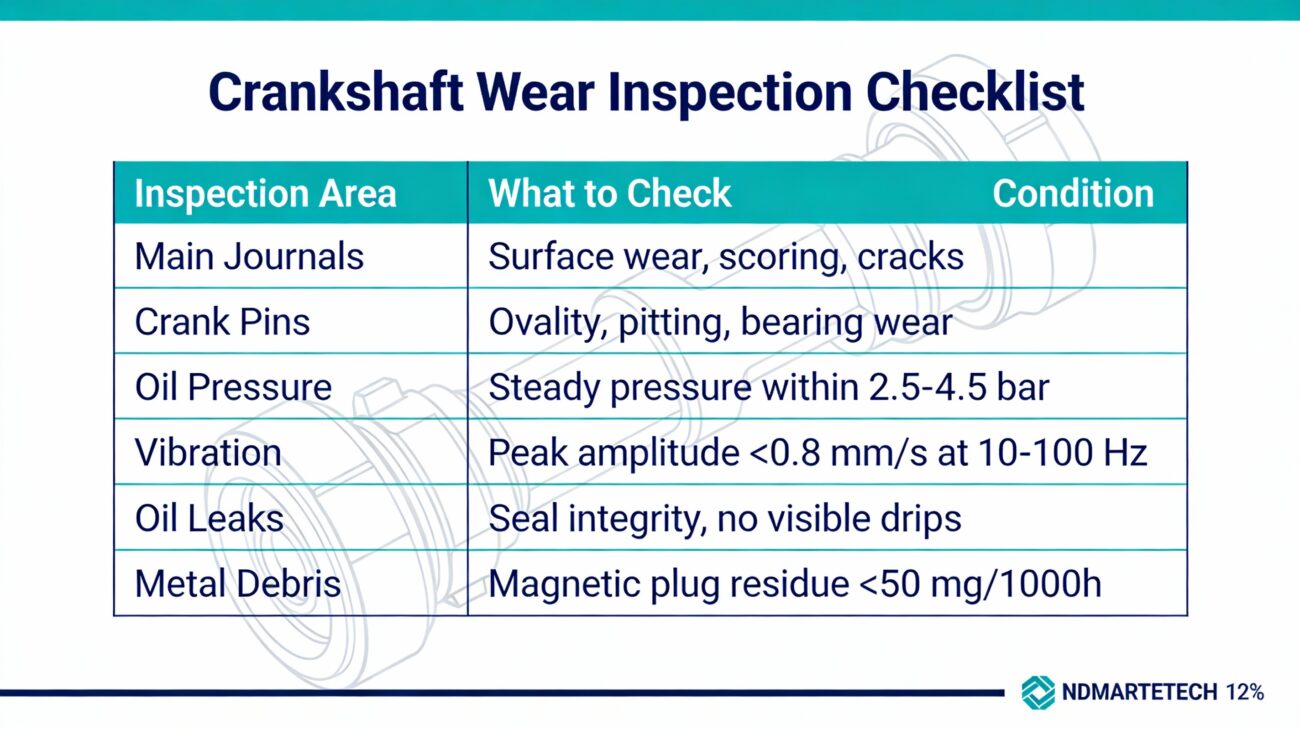
1) Checks of size and appearance
- Take off the crankcase covers and use a solvent to clean the journals and fillets.
- Check for scoring, pitting, cracks, discolouration, or worn rings close to the front and back seals.
- Use a micrometer to measure the diameters of the journals at several points and compare them to the OEM service limitations.
2) Straightness and alignment
- Use a dial indicator on the main journals to check the crankshaft run-out and look for bending or misalignment.
- Use plastigauge or micrometers to measure bearing clearances. If the clearances are too big, it means the journals or bearings are worn out.
3) Finding cracks
- Use magnetic particle inspection (MPI/Magnaflux) or dye-penetrant testing to find small cracks in fillets and journals.
- Some workshops employ kerosene-soak and chalk-dust procedures to show micro-cracks in the field.
If there are cracks, deep scratches, or dimensions that are out of tolerance, the crankshaft must be fixed by a workshop that is approved by the OEM or replaced.
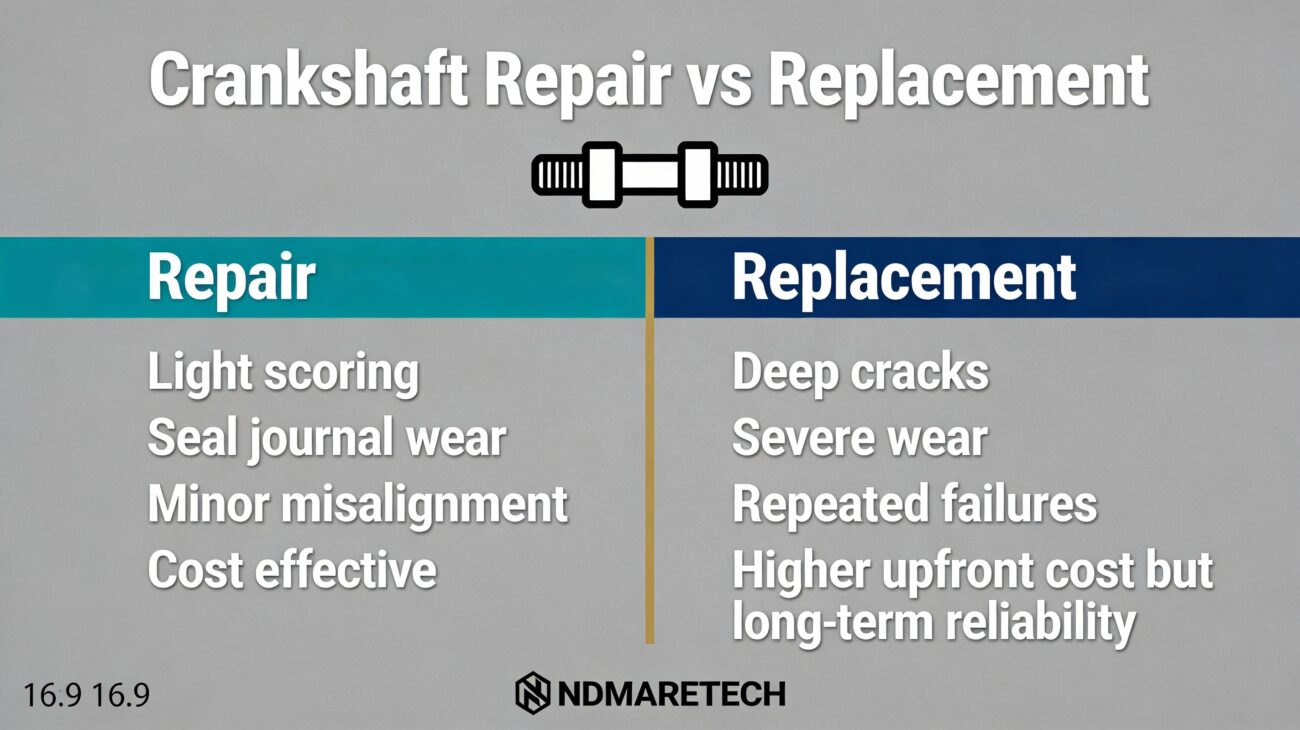
Repair vs. replacement: when to grind, sleeve, or replace
| Condition | Typical solution | Notes |
|---|---|---|
| Light scoring or minor taper | Regrinding and polishing | Restore journals to undersize; use oversized bearings as per OEM specs. |
| Localized seal‑journal wear | Wear‑sleeve installation | Machined sleeve pressed onto the nose; install a matching OEM‑style seal. |
| Bent or misaligned shaft | Straightening and re‑balancing | Done in specialized workshops with precision equipment. |
| Deep cracks or excessive material loss | Full replacement | Use OEM‑grade or OEM‑approved crankshafts from trusted marine‑diesel suppliers. |
Overhaul steps using OEM‑grade parts
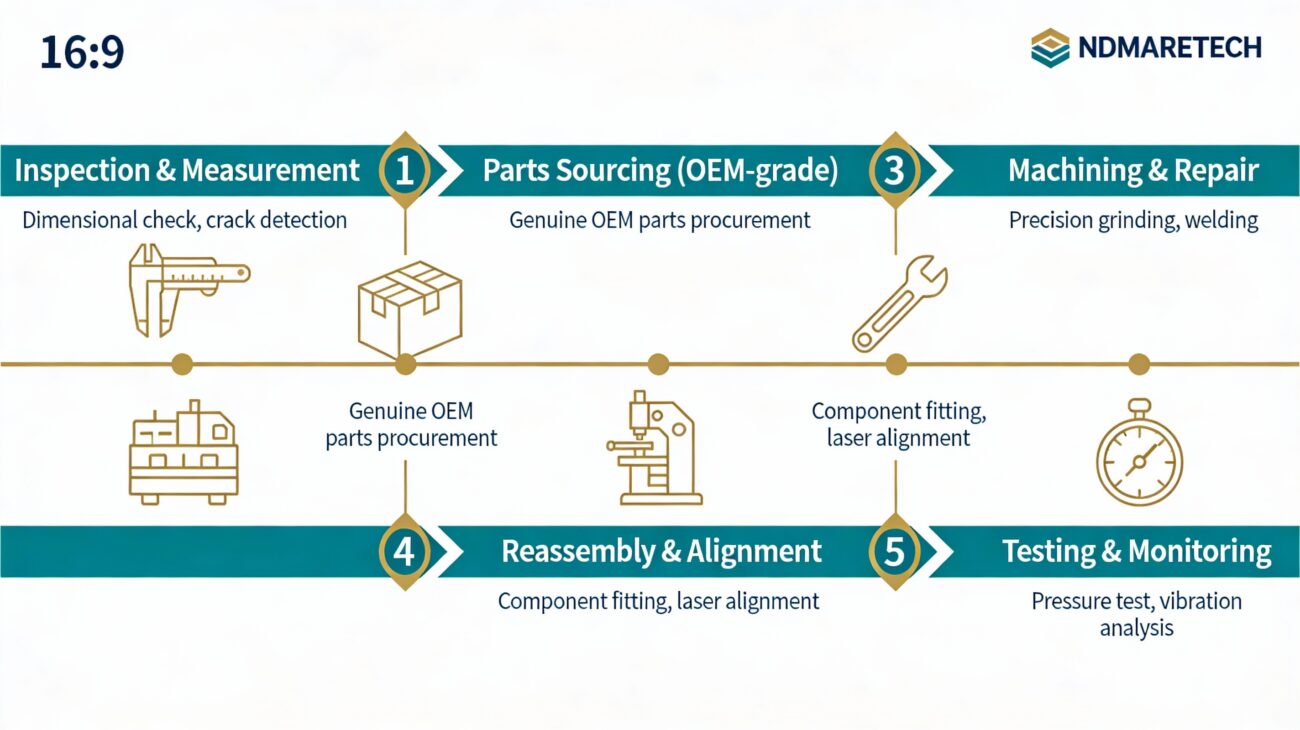
1) Making plans and getting parts
-> Find the OEM crankshaft part code, engine model, and serial number.
-> Get OEM-grade crankshafts, bearings, seals, and gaskets from qualified marine-diesel providers, such as authorized dealers or ISO-certified marine parts distributors.
-> Using real or OEM-equivalent parts makes sure that the metallurgy, heat treatment, and size are all right.
2) Taking apart the engine and cleaning it
-> Take out the oil, remove the parts that aren’t needed, and open the crankcase.
-> Carefully label and store parts; clean all mating surfaces, oil passageways, and galleries.
3) Taking care of and fixing the crankshaft
-> Use the right lifting gear to lift the crankshaft so it doesn’t become bent.
-> If it’s possible to fix, send it to a specialist shop for regrinding, polishing, MPI, and balancing.
4) Replace the bearing and seal
-> Put in new main and rod bearings that are the right size (standard or larger) according to the regrind spec.
-> Put in OEM-spec front and rear crankshaft seals, especially if a wear sleeve has been put on.
5) Putting it back together and lining it up
-> Put the crankshaft back together with the right torque sequences and bearing clearances.
-> Check that the engine is lined up with the gearbox and shaft line to avoid bending strains.
6) Breaking in and keeping an eye on
-> While you slowly increase the load on the engine, keep a close eye on the oil pressure, temperature, and vibration.
-> Check the oil filters and sump for metal particles during the first few hours of use.
Preventing future crankshaft wear
It’s far cheaper to stop something from happening than to fix it. Add these things to your regimen for taking care of marine diesel:
- Strict oil change intervals using the viscosity and TBN suggested by the manufacturer.
- Change the filter and check the oil regularly to find pollution early.
- Regular checks of the crankcase at planned breaks to look at the journals, bearings, and seals.
- After doing any major maintenance on mounts, couplings, or gearboxes, make sure they are properly aligned.
Why OEM‑grade parts matter for crankshaft repairs
Using OEM-grade crankshafts, bearings, and seals from reliable marine-diesel suppliers makes sure that
- The right hardness, heat treatment, and dynamic balancing for your engine model.
- Works with current clearances, lubrication pathways, and tolerances.
- Lower chance of failure too soon and longer mean time between overhauls (MTBO).