


Blog
What Is a DIN Rail and How to Remove DIN Rail Terminal Blocks Guide


What is a DIN Rail?
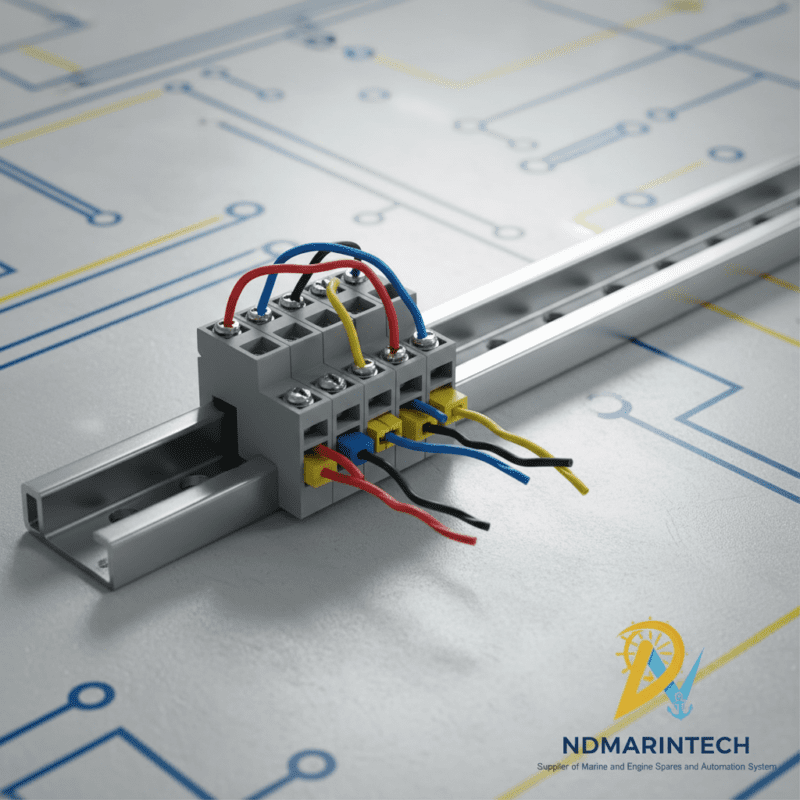
A DIN rail is a metal strip, usually 35mm wide and shaped like a top hat, that holds things like circuit breakers, relays, and terminal blocks in place. The Deutsche Institut für Normung (DIN) came up with it to make sure that all manufacturers across the world may use it and easily install it in enclosures. These rails are made of steel or aluminum and are generally pre-cut or have holes in them so that they may be used in automation panels.
A Look at Terminal Blocks
DIN rail terminal blocks connect wires without soldering, which keeps power distribution from shorting out or overloading. Screw-type clamps hold things in place, push-in clamps let you install things without tools, and spring-cage clamps resist vibration. They can withstand currents from milliamps to hundreds of amps, and they have jumpers that let you connect circuits.
Steps to Remove DIN Rail from Terminal Blocks:
1) First, turn off the power: Always turn off the panel to avoid shocks. To do this, unplug the power sources and use a tester to make sure they are off.
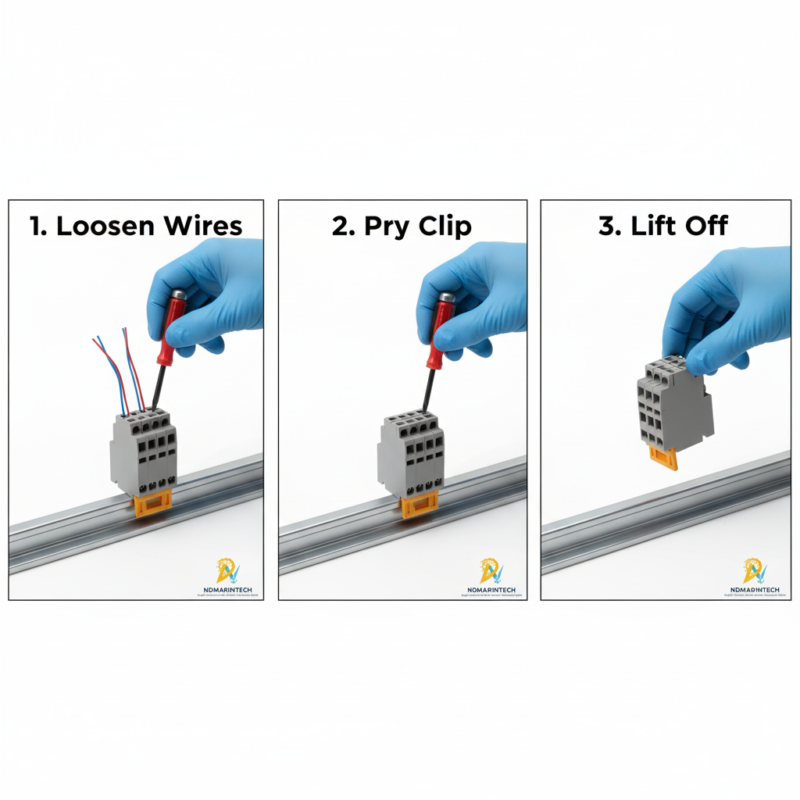
2) Let the wires go: To free the wires, use a screwdriver to loosen the set screws or push the spring releases on each terminal. Cut any zip ties that are holding the bundles together.
3) Let go of the footage: Put a small flathead screwdriver (2–3 mm) in the removal slot or beneath the block’s lip near the rail. To release the snap-lock, carefully pry it up, and then either lift or turn the block off.
4) Slide or turn away: Take off the end blocks first for multiples; jumper pairs may lift together. Pull steadily without pushing to avoid harm.
Advice on Safety
When handling, wear gloves with insulation and eye protection. Check the rails for bends after you take them off, because bent clips make it hard to put them back on. Use tools made by the company, including BND2 levers for tough blocks, to keep from scratching.
Notes for reinstalling
Put the front edge of the block on the rail and snap the back down until it snaps. Tighten the wires again to the right torque, which is usually between 0.5 and 1 Nm. Check connections with a multimeter before turning them on. Batch removals save time when you have to do a lot of work in e-commerce settings, like marine or automation panels.