


Blog
How Do I Test a Crankshaft Position Sensor of Marine Engine?


Testing the crankshaft position sensor (CKP sensor) in a marine engine is important to make sure the engine runs smoothly and doesn’t break down unexpectedly while it’s running. This tutorial gives you a detailed, step-by-step way to test a marine engine’s crankshaft position sensor, along with useful recommendations for doing so in a marine setting. Thanks to our expert engineer, Mr. Zainali Bhojani (CE).
Understanding the Crankshaft Position Sensor for Marine Engines
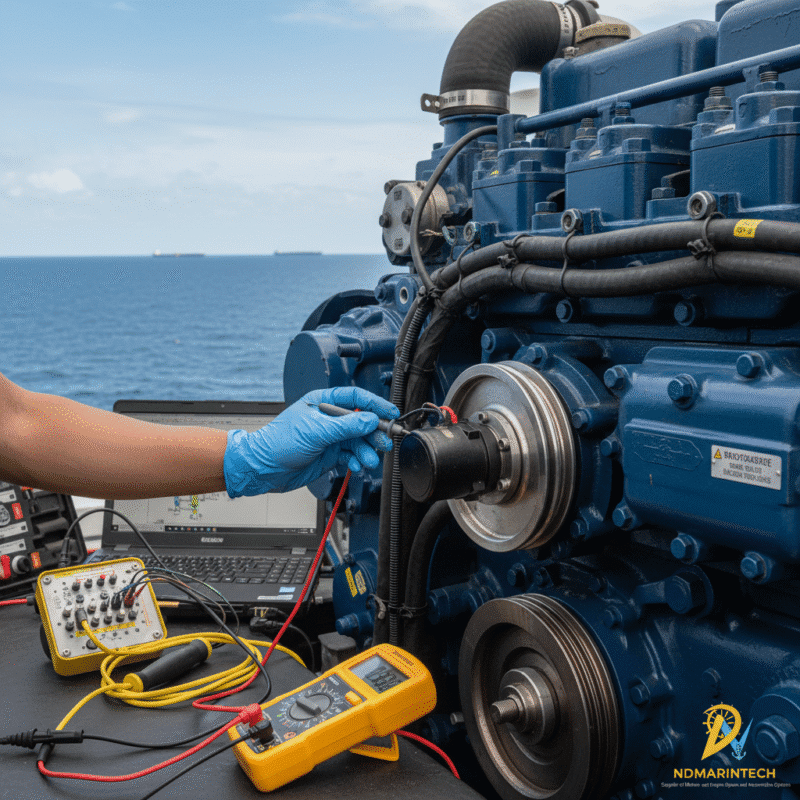
The crankshaft position sensor in marine engines has the same basic job as it does in car engines: it keeps track of the crankshaft’s speed and position so that the best fuel injection timing and ignition management can happen. Marine engines, on the other hand, have to deal with harsher weather, like moisture, corrosion, vibration, and saltwater exposure, which can shorten the life of sensors and make them work less well.
What the CKP Sensor Does in Marine Engines
- By picking up on magnetic changes generated by the flywheel teeth passing near the sensor, it measures the crankshaft’s speed (RPM) and position.
- It sends signals to the Engine Control Unit (ECU) or marine engine control system to manage the timing of the spark and fuel for better combustion.
- Helps keep the engine’s timing in sync, which is important for smooth running and starting in marine applications.
To detect the ferromagnetic pulse wheel teeth as they spin, these sensors are normally placed close to the crankshaft flywheel with a little air gap (approximately 2 mm).
Types of Crankshaft Position Sensors Used in Marine Engines
Marine engines and car engines usually employ the same kinds of sensors:
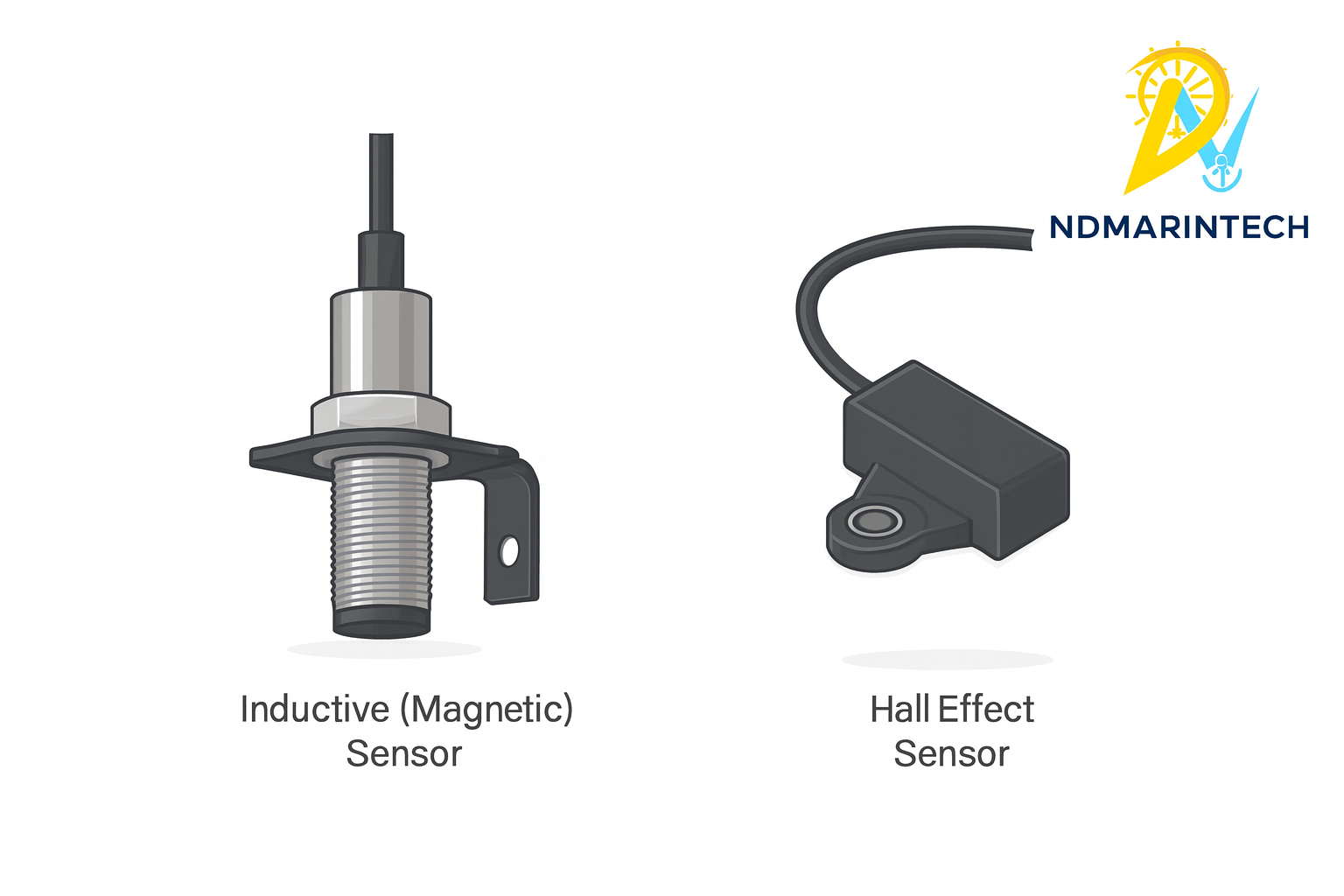
1) Inductive (Magnetic) Sensors:
These sensors make alternating current (AC) voltage signals based on how fast the flywheel turns. They usually have basic two-wire systems.
2) Hall Effect Sensors:
Hall effect sensors are digital sensors that emit a pulsed DC voltage signal. They usually have three wires: power, ground, and signal.
Inductive sensors are usually more durable, but they are more sensitive to the position of the installation and the air gap. Hall Effect sensors, on the other hand, send exact digital signals but require more wire.
Signs Indicating Possible CKP Sensor Failure in Marine Engines
Finding problems early helps keep the engine from breaking down or stopping at sea. Keep an eye out for these signs:
- Starting problems or the engine won’t turn over.
- The engine may misfire while under load, or the RPM numbers may be inconsistent.
- Sudden stops or lack of power while navigating.
- If the car has diagnostics, the engine warning or problem codes should be on the screen.
- Marine exposure has caused the sensor wiring and connectors to rust or break.
- Because marine engines typically work in dangerous places, a faulty CKP sensor should be tested right away and fixed.
Getting Ready: Tools and Safety Tips for Testing Marine Sensors
Before you test, use these tools and perform these steps:
1) Digital multimeter: To check voltage and resistance.
2) Diagnostic scan tool: If you can get it for marine engine fault codes and real-time RPM data.
3) Tools for basic work: To get to the sensor and take it out if necessary.
4) Protective gear includes gloves, eye protection, and lubricants that don’t rust.
5) Service manual: To find out where the sensor is, how it is wired, and what measurement values are expected for your marine engine model.
Always cut off the electricity to the marine engine or disconnect the battery before working on the sensors to avoid shorts or starting the engine by accident.
How to Test the Crankshaft Position Sensor on a Marine Engine?
Step 1) Visual Inspection
- To get to the CKP sensor, take off the access panels.
- Inspect the sensor housing for physical damage, rust, or oil that could make it less effective.
- Check the wire harness and connectors for signs of wear or corrosion, which is common in marine settings.
- Make sure the sensor is securely mounted and has the right amount of space between it and the wall (usually 1.5–2.5 mm).
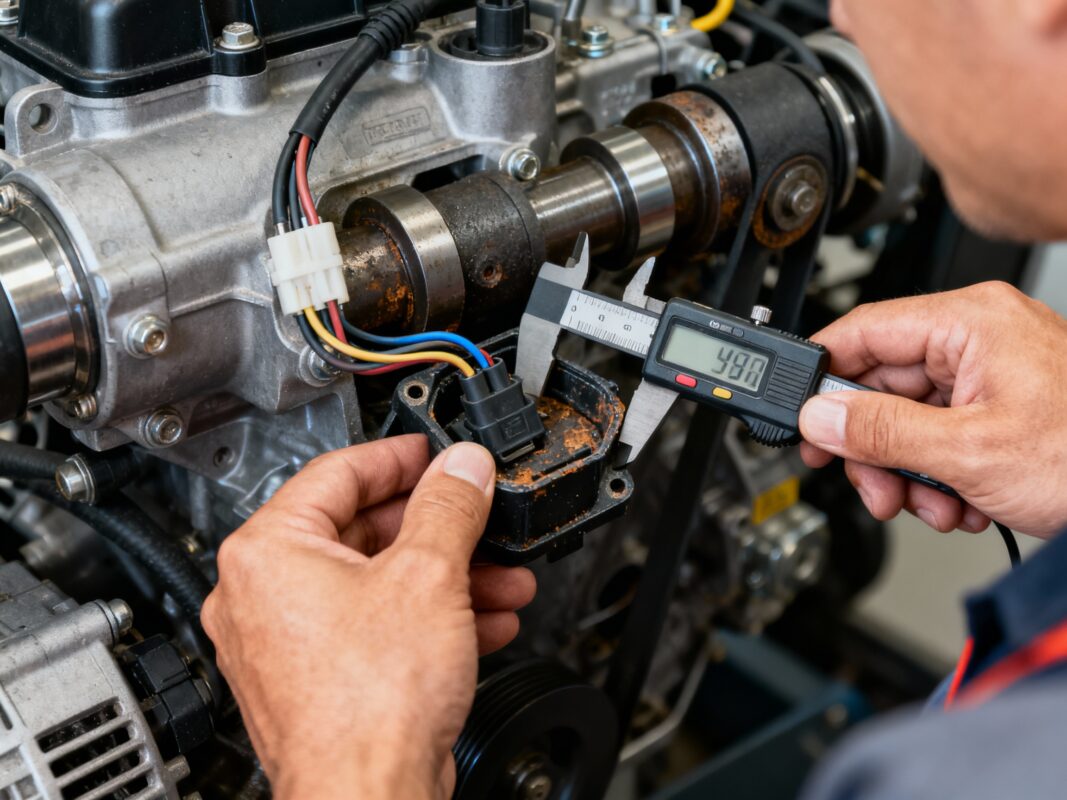
If there are greasy deposits on the sensor tip, cleaning it with a cloth that isn’t rough can make the signal better.
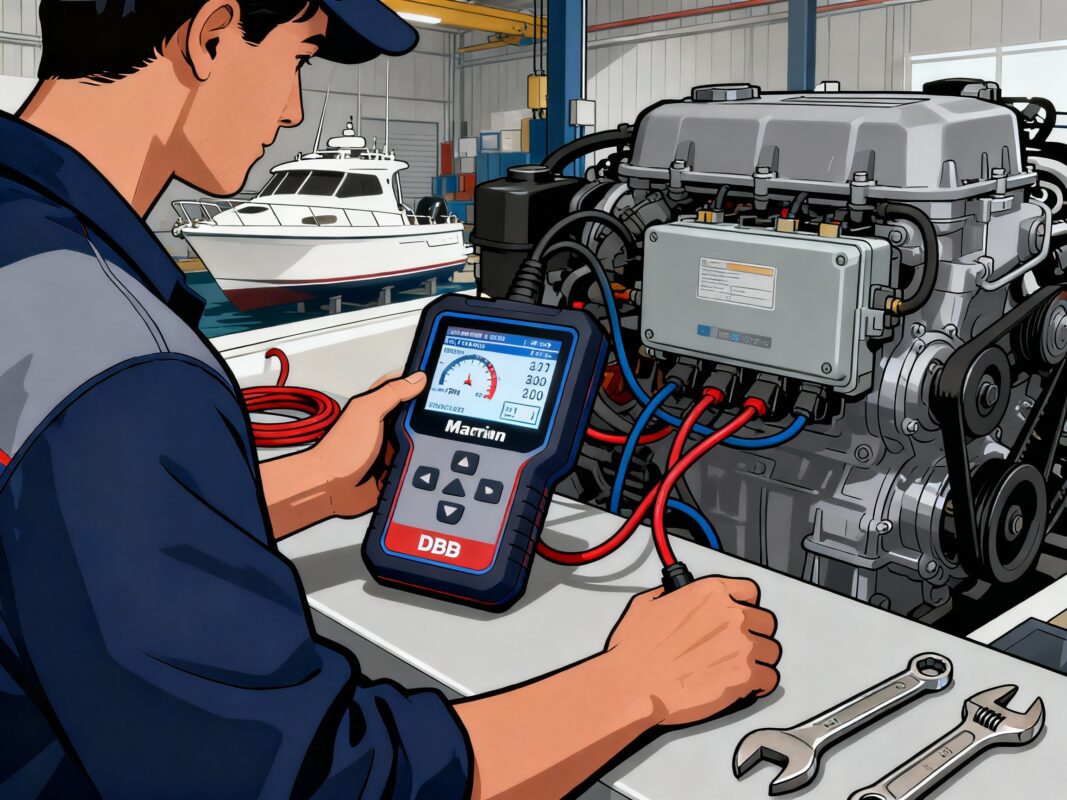
Step 2) Look for Fault Codes in the Engine Control System
Modern marine engines might have diagnostic tools in the ECU:
- Follow the service instructions to connect your diagnostic scanner or diagnostic instrument that is unique to marine engines.
- Find fault codes that have to do with the CKP sensor circuit (the exact code ranges depend on the engine maker).
- Keep track of the RPM readings; if there is no RPM or it changes erratically when cranking, this usually means that the sensor is broken.
Step 3) Testing the Sensor’s Resistance (for Inductive Sensors)
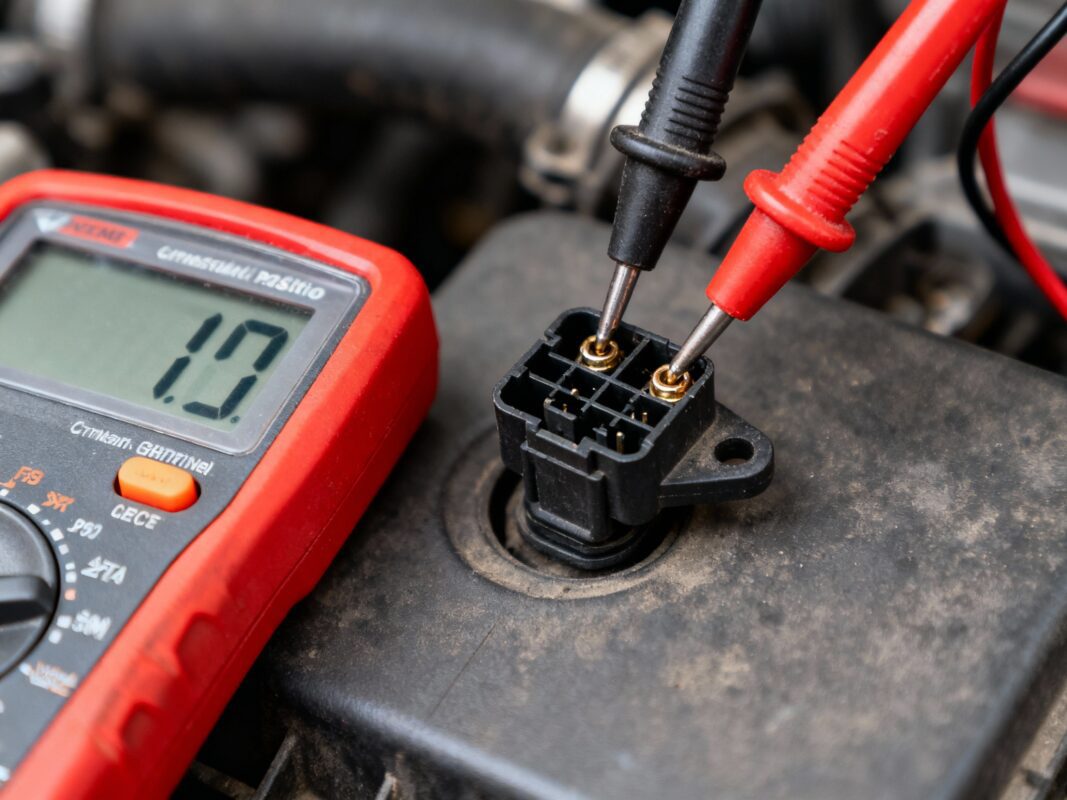
- Unplug the CKP sensor’s electrical connector.
- Set your multimeter to measure resistance (ohms).
- Check the resistance between the sensor terminals.
- Good sensor resistance is usually between 200 and 1,000 ohms. If the results are outside of this range, it could mean that the sensor is broken.
Step 4) Testing the Voltage Output
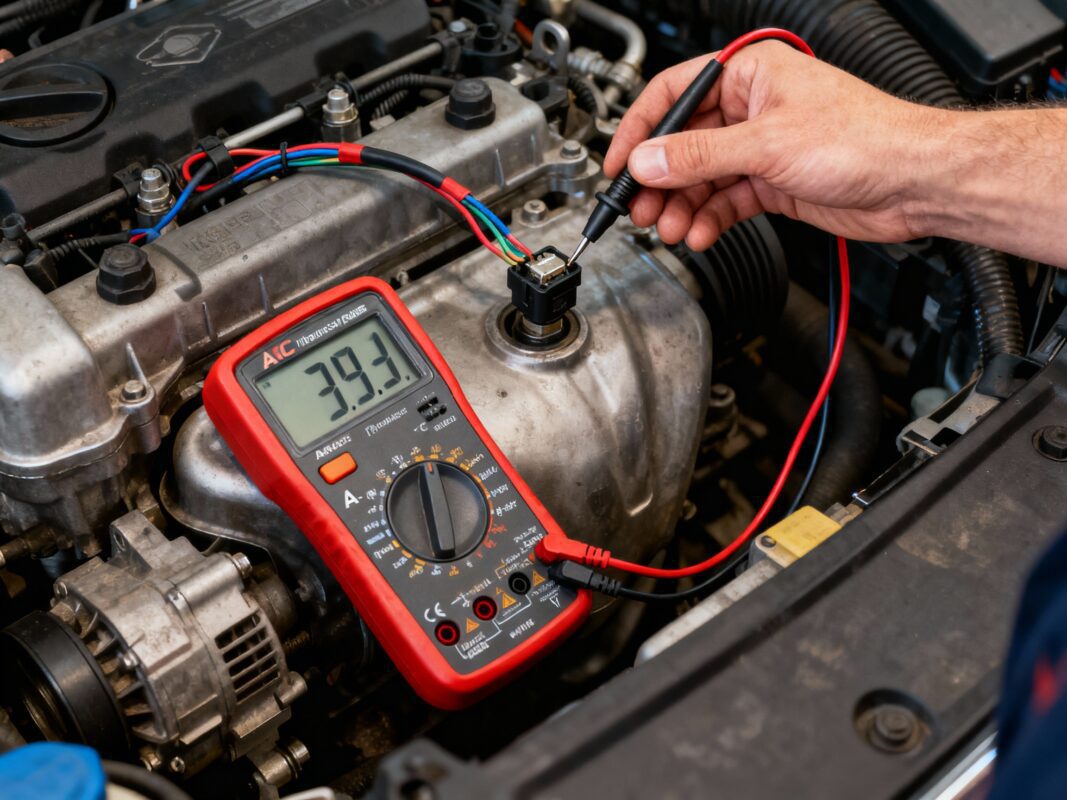
For Inductive Sensors (AC Voltage Output)
- Put the sensor back together.
- Change the multimeter to AC voltage mode.
- Turn the engine over while checking the sensor output voltage.
- Expect the AC voltage to change between 0.5 and 1.5 volts, depending on the speed. If the voltage is zero or jumps about, there may be a problem with the sensor or wiring.
For Hall Effect Sensors (DC Voltage Signal)
- Set the multimeter to measure DC voltage.
- Verify the voltage of the sensor’s power supply (typically around 5 V) when the ignition is on (but the engine is off).
- When you crank the engine, verify the voltage on the signal line. It should switch between 0 V and power voltage in a square wave pattern.
Step 5) Do Advanced Testing Using an Oscilloscope (If Available)
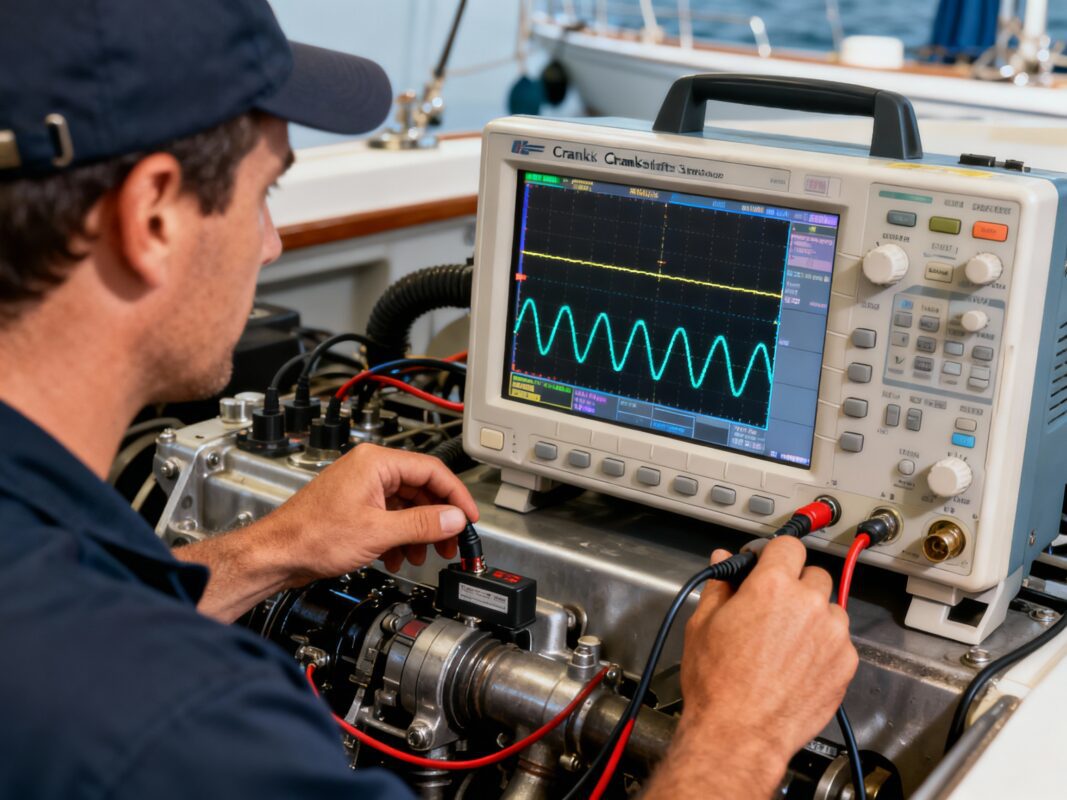
- Connect the probes of the oscilloscope to the sensor output and the ground.
- While cranking, look at the patterns in the waveforms.
- Inductive sensors show voltage waveforms that look like sine waves, while Hall Effect sensors show square wave outputs.
- If the waveform is not regular or is missing, it could mean that the sensor is broken or that the wiring is bad.
Step 6) Check the Wiring and Associated Relay
- Marine environments create corrosion in wiring and relays, which makes sensors work less well.
- Check the relays that are connected to the engine control.
- Check the wiring harness for breaks, shorts, or grounding problems with a multimeter continuity test.
- Before changing the sensor, the wiring and relay must be in good shape.
Step 7) Replace the Sensor and Perform Final Tests.
- If testing shows that the sensor is broken, replace it with a marine-grade CKP sensor that is made for your engine make and model.
- Put it back together with the right air gap and fasten it.
- After replacing, do the voltage and resistance tests again to make sure they work.
- Do a test run to make sure the engine is working properly.
Maintenance Guide – How to Take Care of Marine CKP Sensors?
- Check and clean the sensor and mounting location every so often to keep debris from building up.
- Put dielectric oil on electrical connectors to keep them from rusting.
- Keep salt spray and vibration from hurting the wiring paths of sensors.
- Check the condition of the flywheel or pulse wheel often; broken teeth can stop sensor signals.
Final Thoughts:
Testing a crankshaft position sensor on a marine engine is similar to testing one on a car, but you have to pay more attention to things that can affect marine engines, like corrosion, moisture, and vibration. You can confidently check the health of your sensors and make sure your engine is safe to run on water by carefully doing visual checks, resistance and voltage testing, and using diagnostic tools.
Regular sensor maintenance and testing on time keep your marine engine running smoothly in all conditions and keep it from breaking down at sea.
Author- Mr. Zainali Bhojani (CE)