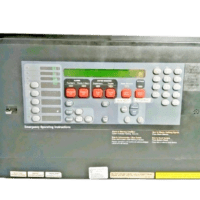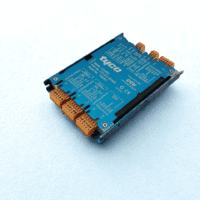


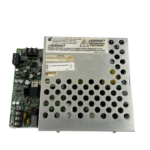
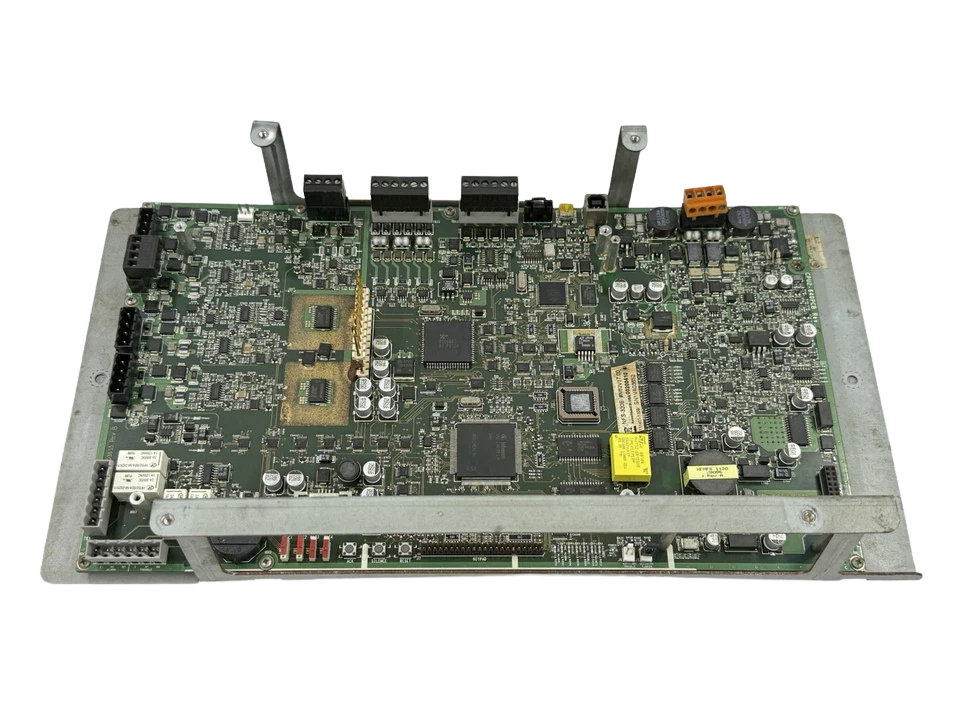
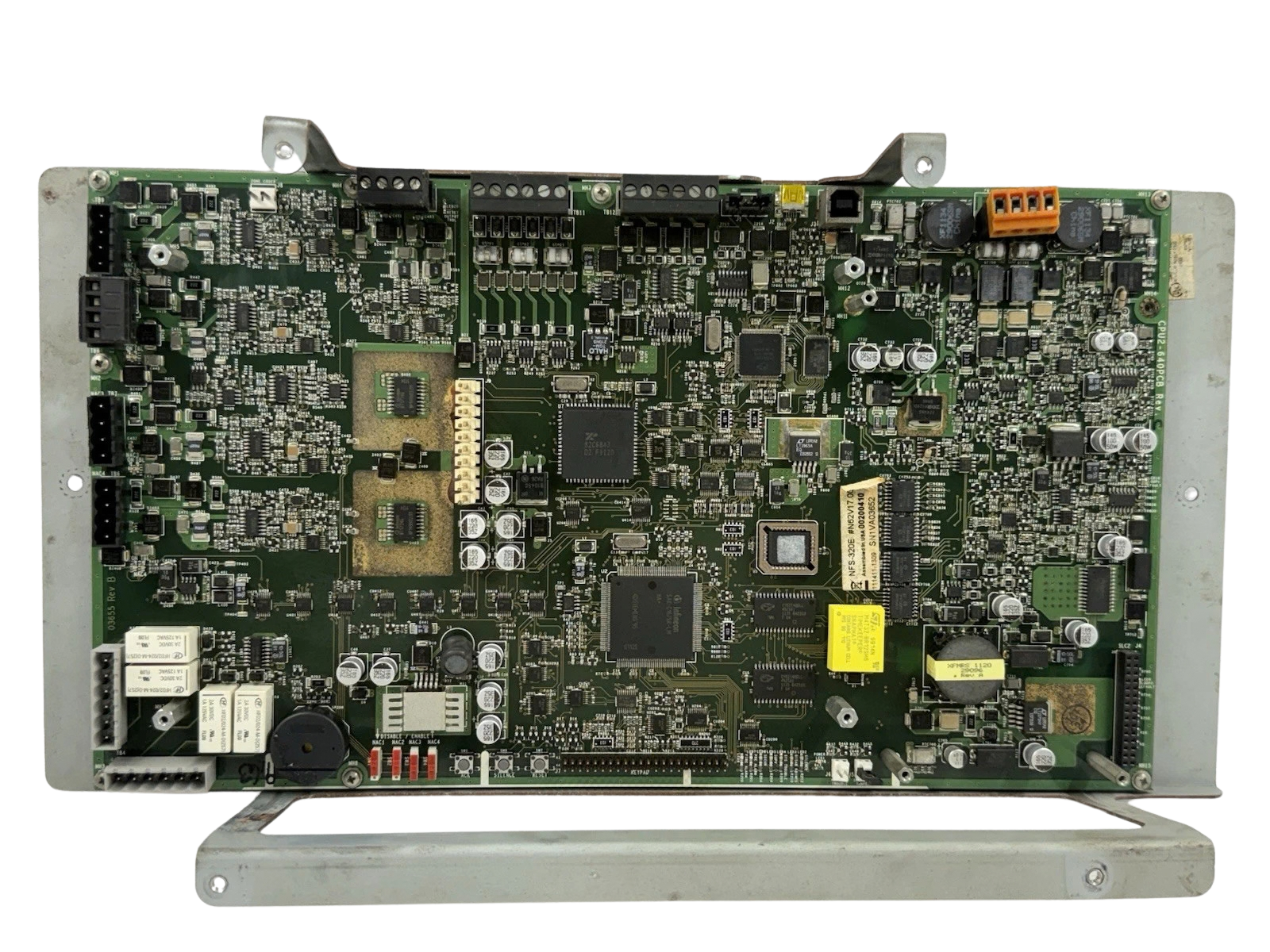
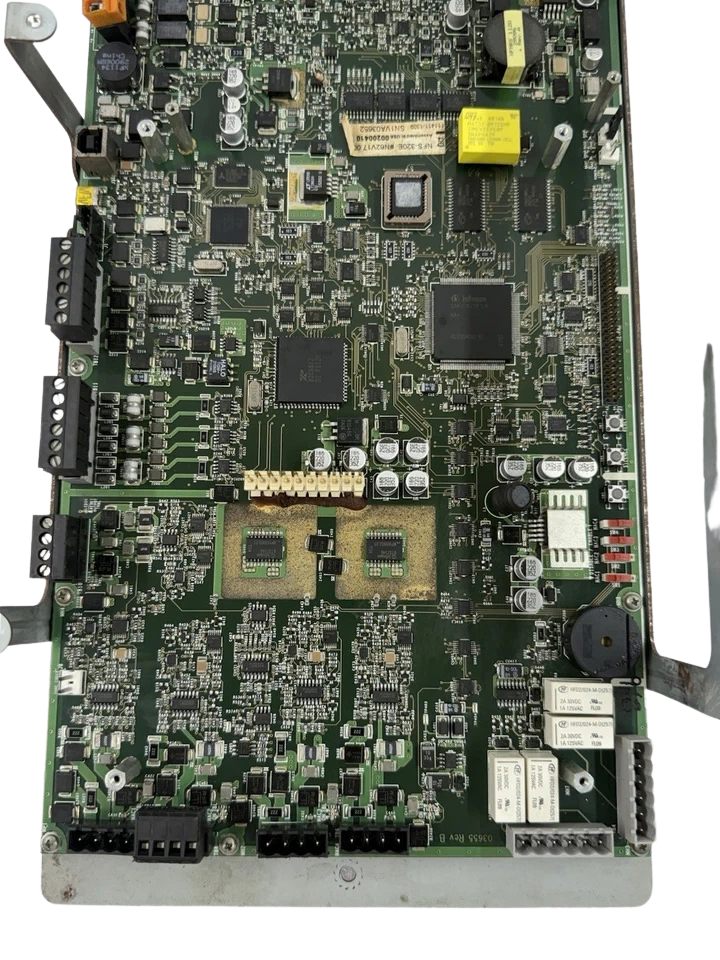
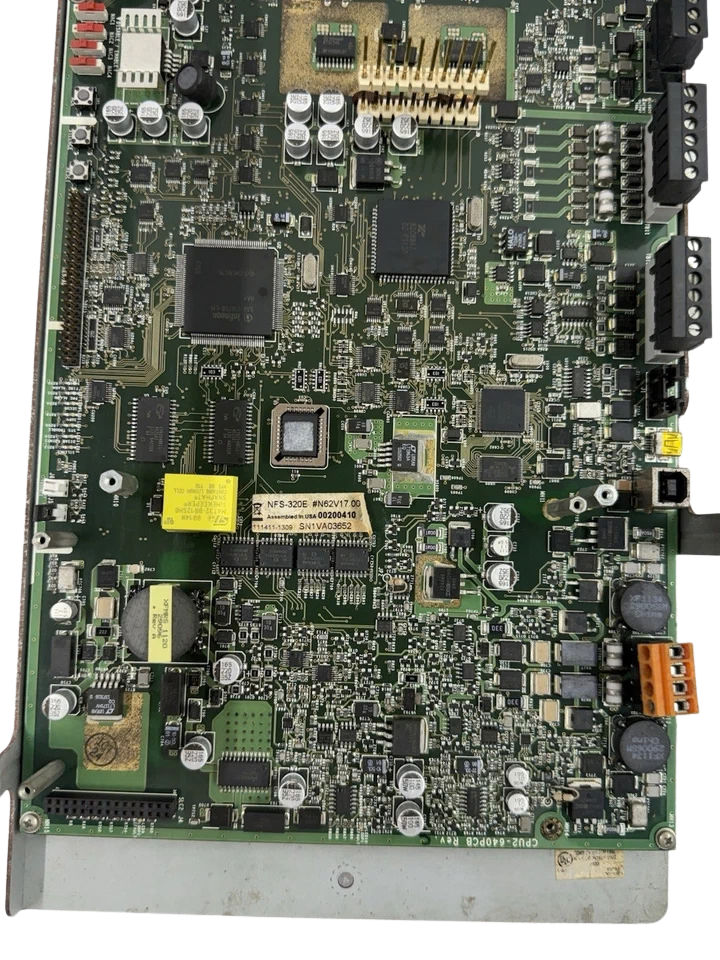
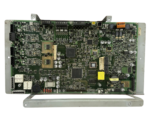
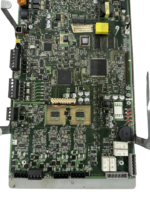
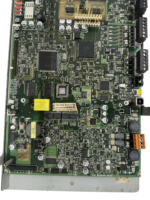



NOTIFIER Honeywell NFS-320E Circuit Board for CPU-320E Fire Alarm Control Panel
The NOTIFIER Honeywell NFS-320E Circuit Board (CPU-320E) serves as the central processing unit and integrated power-distribution core for the ONYX® Series NFS-320E intelligent addressable fire alarm system. Configured specifically for 220/240 VAC marine, offshore, and international commercial applications, the CPU-320E board integrates the system CPU, an offline switching power supply, four Class A/B Notification Appliance Circuits (NACs), and a dedicated FlashScan® Signaling Line Circuit (SLC) onto a single modular PCB chassis.
Engineered to operate reliably under high vibration, wide humidity ranges, and continuous marine duty cycles, this board processes analog addressable inputs across up to 318 addressable points (159 detectors and 159 monitor/control modules) with an SLC loop polling speed under 2 seconds. It features built-in degraded mode redundancy: if primary processor execution is disrupted, FlashScan devices fall back to hardwired safety logic to trip NAC outputs and activate dedicated trouble/alarm relays.
Model Details:
- Manufacturer: NOTIFIER by Honeywell
- Model Name: NFS-320E Main CPU Assembly
- Manufacturer Part Number (MPN): CPU-320E / NFS-320E
- Printed Circuit Board P/N: CPU-320E (240V Version)
- Firmware Protocol Support: FlashScan® & CLIP (Classic Loop Interface Protocol)
- Operating Voltage Spec: 220–240 VAC primary input; 24 VDC secondary bus
Technical Specifications
| Parameter | Engineering Rating & Operational Limits |
|---|---|
| Primary Input Voltage (AC) | 220/240 VAC, 50/60 Hz, 1.5 A maximum line current |
| System Output Bus (DC) | 24 VDC filtered, power-limited (Class 2) regulated power bus; 176 mVrms ripple |
| Power Supply Output Capacity | 3.0 A continuous standby; 6.0 A maximum output current during alarm state |
| Secondary Battery Charging | Float-charge circuit supports 18 Ah to 200 Ah sealed lead-acid (SLA) batteries |
| SLC Loop Specifications (TB13) | 24 VDC nominal (27.6 VDC max); 200 mA current limit; Class A/B; max resistance 50 ohms; max loop length 12,500 ft (3,810 m); max capacitance 0.5 µF |
| Notification Circuits (TB6–TB9) | 4 independent Class A/B NACs; 24 VDC regulated; 1.5 A max per circuit; 2.2 kΩ 1/2W ELR |
| Auxiliary Power Outputs (TB10) | Resettable (detectors) & Non-resettable (annunciators): 24 VDC nominal, 1.25 A continuous |
| Dry Contact Relays (TB4 & TB5) | Alarm, Trouble, Supervisory, Security; Form-C relays rated 2.0 A @ 30 VDC (resistive) |
| Communications & Data Bus | TB11 (EIA-485 Terminal/ACS), TB12 (EIA-232 Printer/PC), J1 (NUP Network Port), J2 (USB-A PC link) |
| Operating Temperature & RH | 0°C to 49°C (32°F to 120°F); 93% ± 2% Relative Humidity (non-condensing) at 32°C |
| Terminal Block Pitch & Gauge | Pluggable/screw barrier blocks accepting 12 AWG to 18 AWG solid/stranded wire |
Key Features
- High-Density Single-Loop Addressing: Controls up to 318 points (159 intelligent detectors and 159 addressable monitor/control modules) across a single Class A or Class B SLC loop with continuous sub-2-second sweep intervals.
- High-Efficiency 6.0 A Power Core: Delivers 3.0 A continuous filtered DC current in standby and up to 6.0 A total auxiliary/notification current during full alarm signaling.
- Quad Class A/B Supervised NACs: Built-in selectable synchronization protocols for System Sensor, Gentex, and Wheelock strobes with programmable silence inhibit and auto-silence timers.
- Integrated Hardware Redundancy (Degraded Mode): In the event of primary CPU microprocessor lockup, discrete hardware failover allows local FlashScan field detectors to trigger panel NACs and general alarm relays.
- Comprehensive Serial Interfaces: Native dual EIA-485 interfaces (ACS and Terminal modes), high-speed USB-A for VeriFire® Tools programming, EIA-232 serial printer port, and Network Universal Protocol (NUP) port.
Compatibility
- Primary Keypad/Displays: KDM-R2 80-character backlit LCD display/keypad, NCA-2 Network Control Annunciator.
- Loop Extension & Network Modules: LEM-320 (Loop Expander Module), NCM-W / NCM-F (Standard Wire/Fiber Network Communications Modules), HS-NCM-W / HS-NCM-MF / HS-NCM-SF (High-Speed NOTI-FIRE-NET modules).
- Addressable Initiating Devices: FSP-851 / FSP-951 series optical smoke detectors, FST-851 / FST-951 thermal detectors, FCO-951 multi-criteria fire/CO sensors, and FlashScan monitor/relay modules (FMM-1, FCM-1, FRM-1).
- Annunciators & Audio Subsystems: ACM-24AT / ACM-48A series LED annunciators, LCD-80 / LCD-160 liquid crystal displays, DVC Digital Voice Command units, and UDACT universal digital communicator transmitters.
- Software Utility: VeriFire® Tools Programming Utility (v8.00 or higher recommended for legacy and current FlashScan revisions).
Applications
- Commercial Marine Vessels: SOLAS-compliant machinery space, accommodation spaces, bridge, and cargo bay monitoring aboard container vessels, chemical tankers, and bulk carriers.
- Offshore Energy Assets: FPSOs, fixed platforms, drillships, and offshore substations requiring clean Class A looping and NFPA-compliant marine listings.
- International Heavy Industrial Facilities: 230/240 VAC industrial manufacturing hubs, chemical processing plants, and power utilities requiring high-immunity EMC fire detection boards.
- Retrofit Enclosures & Upgrades: Drops into existing CAB-320, CAB-3, or CAB-4 series enclosures during planned drydock or shutdown refits.
Frequently Asked Questions
What is the technical difference between CPU-320 and CPU-320E?
The sole functional difference is the primary line voltage input. The CPU-320 operates on 120 VAC line power (standard for North America), whereas the CPU-320E is engineered specifically for 220/240 VAC mains input, which is standard for marine vessel switchboards, offshore rigs, and international facilities.
Can the CPU-320E board handle both FlashScan and CLIP protocol field devices simultaneously?
Yes. The CPU-320E firmware supports mixed loops. You can run older CLIP detectors alongside high-speed FlashScan devices on the same SLC loop, though FlashScan devices provide faster polling speeds, individual LED interrogation, and sub-2-second sweep times.
What is the maximum loop impedance allowed on the TB13 SLC loop?
The maximum allowable DC loop resistance is 50 ohms for both Class A and Class B wiring topologies. Total circuit length must not exceed 12,500 feet (3,810 meters), and line-to-line/line-to-shield capacitance must remain under 0.5 µF.
What happens if the primary processor fails on the CPU-320E board?
The board features built-in degraded mode circuitry. If the main microprocessor freezes or crashes, FlashScan initiating devices switch to hardwired baseline trips that trigger onboard NAC circuits and throw the general alarm relay, provided the degraded mode switches for those circuits are enabled.
Can I upgrade my firmware in the field using VeriFire Tools?
Yes. The CPU-320E board includes a native high-speed USB-A port (J2) and a NUP network connection (J1). You can flash firmware updates, extract panel event logs (up to 800 events), and download complete system configurations directly using Honeywell VeriFire® Tools software