

Blog
Automation Expo 2026: Trends & Industrial Spares Guide

Automation Expo 2026: Key Industrial Trends and What They Mean for Plant Engineering
As manufacturing plants, processing units and marine engineering industries face rising challenges to improve efficiency, reduce energy consumption and avoid costly downtime, industry convergence points have never been more important. Automation Expo 2026 at the Bombay Exhibition Centre, Mumbai is Asia’s leading marketplace and technical symposium for smart manufacturing, process control and industrial automation.
For system integrators and engineering procurement teams, exhibits like this give a crystal clear idea of where industrial technology is going. Here’s a deep dive into the key trends of Automation Expo 2026 and how they relate back to the critical plant hardware & spares, from software-centric control environments to the heavy-duty gear that keeps operations up and running on the ground and at sea.
1) The hardware backbone – Why dependable controls and spares matter more than ever
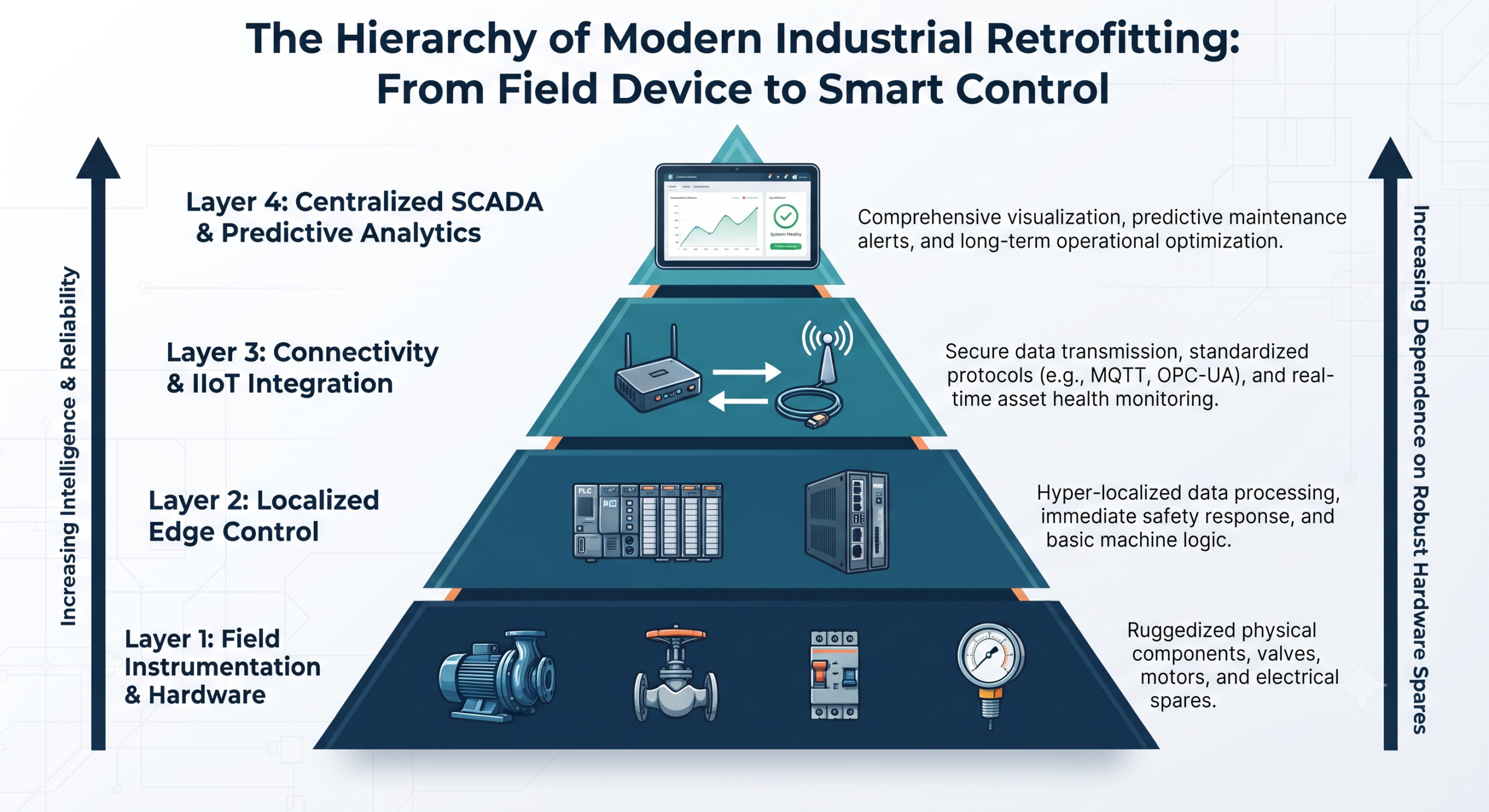
Digital twins and artificial intelligence are popular topics at conferences, but all high-level automation strategies boil down to the physical layer. The best software algorithm or edge-computing controller is only as good as the field hardware that carries out its directives.
Physical resilience is a common theme on the expo floor in the conversations:
PLC and Process Controllers: Today’s operations have a need for modular, scalable logic controllers that will work smoothly with legacy configurations without completely retooling a plant.
Precision Sensing and Actuation: Modern systems rely on field components capable of supplying accurate diagnostics and self-calibration data in real time, from absolute encoders to high-response actuators.
Pumps and Fluid Management Systems: Robust variable-flow regulation and heavy-duty pumping devices are needed for interfacing with automated control loops in industrial and maritime fluid circuits.
Bridging the Gap: Sourcing Critical Components
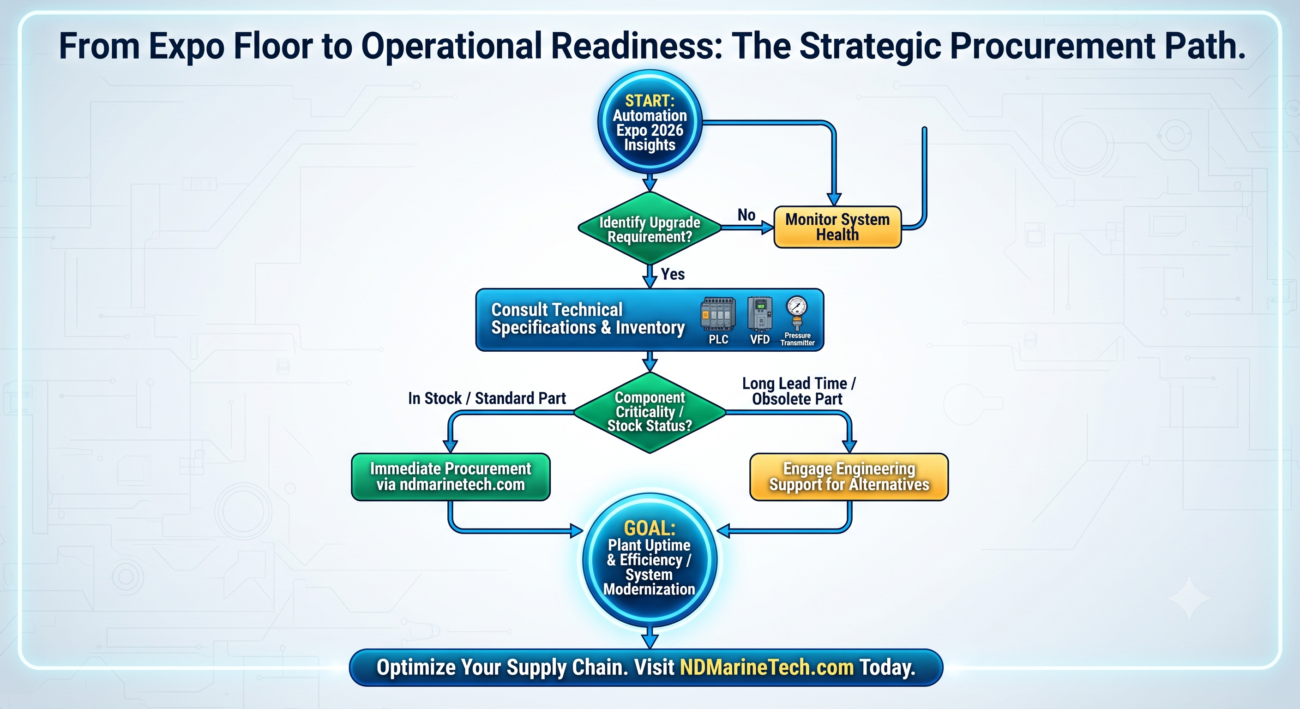
When upgrading or maintaining automated architecture, facility managers frequently encounter long lead times for specialized replacement hardware. Sourcing reliable PLCs, drives, circuit breakers, and mechanical spares through trusted supply channels ensures that the transition to smart manufacturing doesn’t stall due to component scarcity.
2) Major Technology Trends Influencing Plant Engineering in 2026
A. Edge Computing Nearer to the Machine
For years, the industry has been highly dependent on centralized cloud systems. But the issues of bandwidth, latency and security have shone the spotlight on hyper-local edge computing. Operational data can be processed at or near the machine level, enabling instantaneous safety reactions and rapid closed loop control. The trend is increasing the requirement for tough industrial electronics and localized control gear that can operate in difficult settings.
B. Hybridization of Industrial IoT (IIoT) with Predictive Maintenance
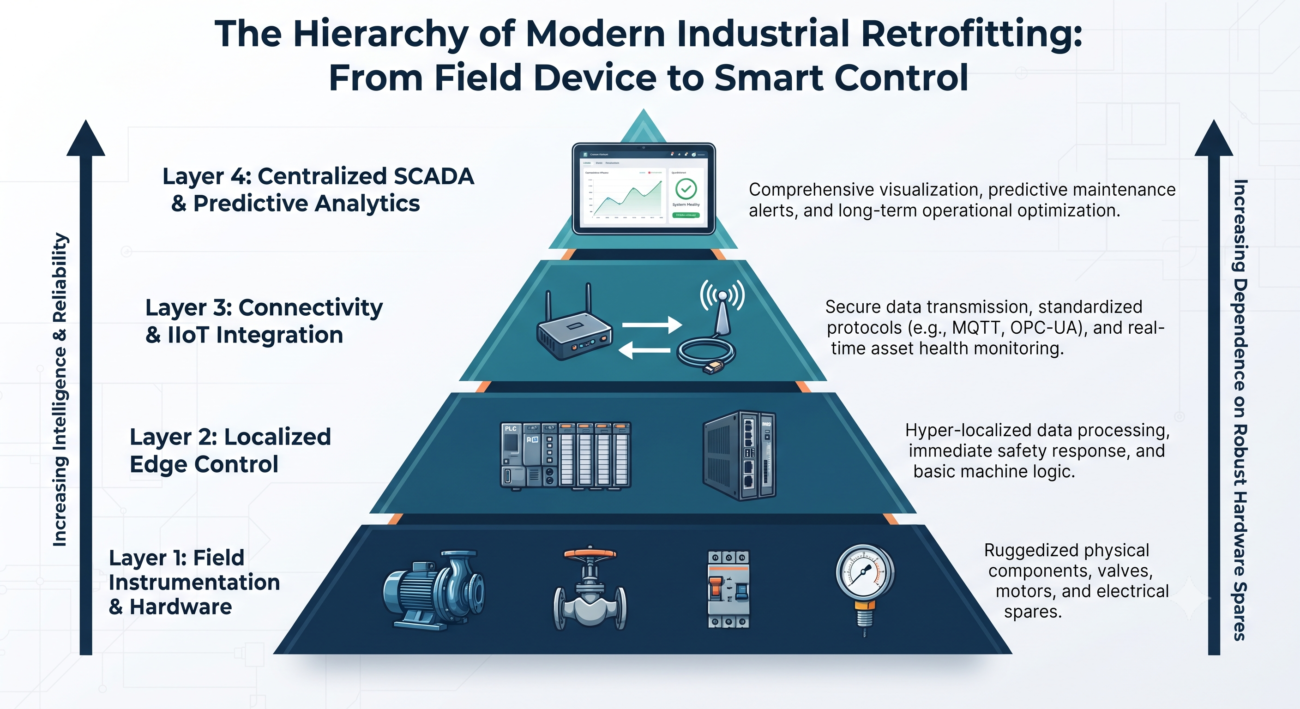
Industrial IoT is no longer an experimental concept, it’s a fundamental assumption for modern operations. Facilities are upgrading aging equipment with smart sensors, vibration monitors, and connected control valves that provide live health metrics to centralized Supervisory Control and Data Acquisition (SCADA) systems. Plants dramatically reduce unforeseen mechanical failures by transitioning from reactive repairs to predictive maintenance programs.
C. Power Distribution and Protection
As automation increases, plant electrical systems become more sensitive. Modern circuit protection devices, thermal-magnetic breakers and steady power sources that can handle dynamic electrical loads without unnecessary tripping are key to protecting high-value assets like hefty motors, specialized drives and automated valve assemblies.
3) Practical implications for the marine and heavy industry sectors
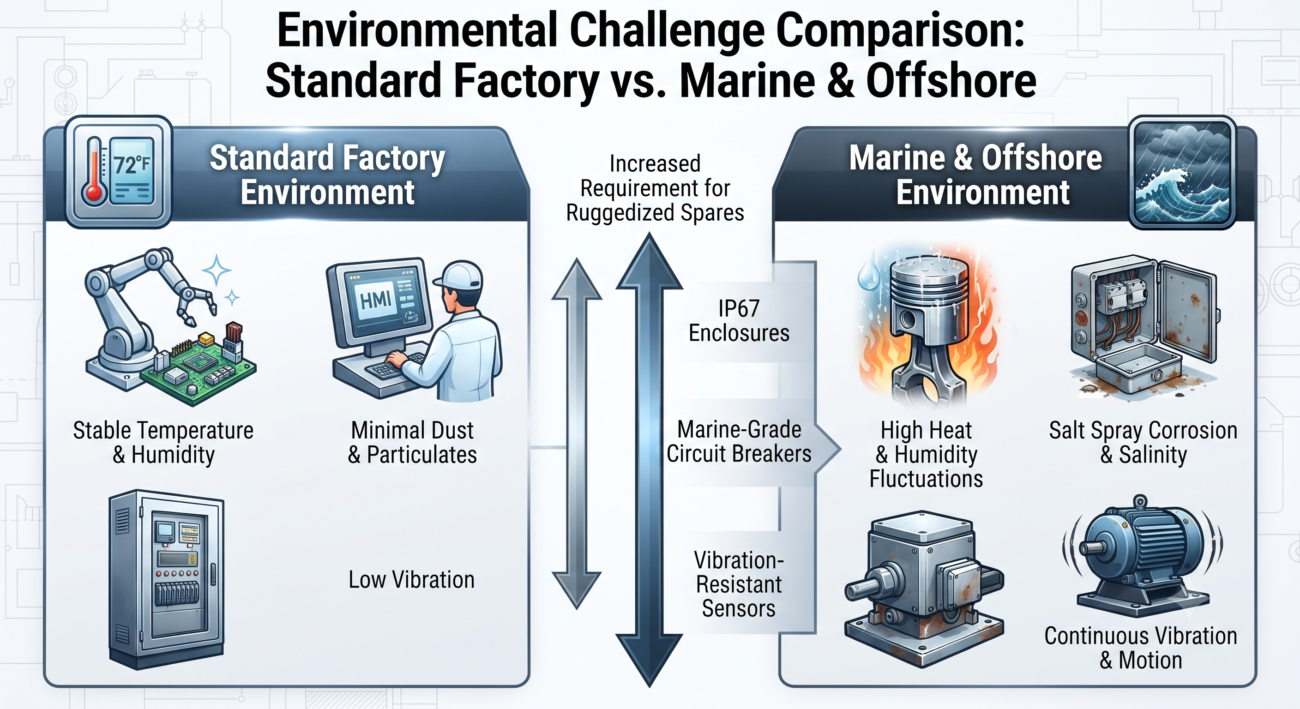
Factory automation is the big story, but the marine and heavy process industries are making similar changes. Vessel automation systems, offshore drilling rigs and heavy chemical processing facilities have specific environmental challenges:
Vibration and Corrosion Resistance: Hardware in the naval engine room or on offshore platforms must survive high humidity, salt spray and constant mechanical vibration.
Interoperability: Legacy vessel management systems require upgrading yet the components must be able to communicate across standard industrial protocols and still retain fail-safe manual override alternatives.
Modular procurement is also the focus of engineering teams in future-proofing their operations, so that each replacement pump, valve actuator or electrical relay installed today is fully compatible with the digital diagnostic requirements of tomorrow.
Conclusion: Making the Most of Expo Insights
Automation Expo 2026 throws light on an absolute truth that is fast tracking the transition to autonomous, highly efficient processes. But the upside of this progression can only be realized with a disciplined approach to hardware maintenance and component reliability and strategic inventory management.
For long-term operational success of your facility, it is critical to keep your infrastructure in line with modern engineering standards – whether it be replacing critical mechanical valves, sourcing hard-to-find electrical spares or upgrading your facility’s control architecture.
Are you assessing new automation hardware or seeking specific replacement spares to improve your plant infrastructure? Find the exact components your operations need by exploring our comprehensive technical categories or by contacting our engineering support team.