



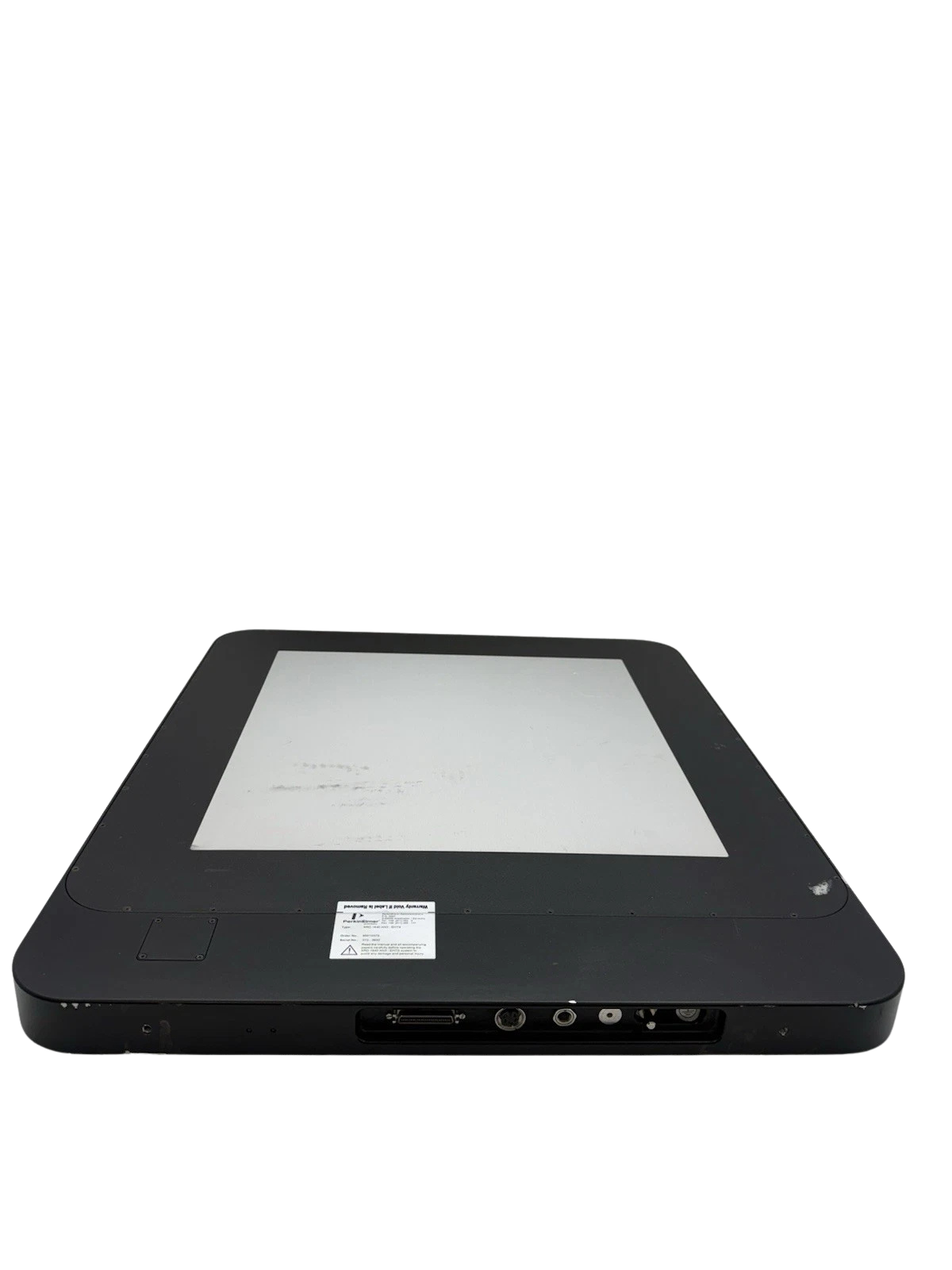
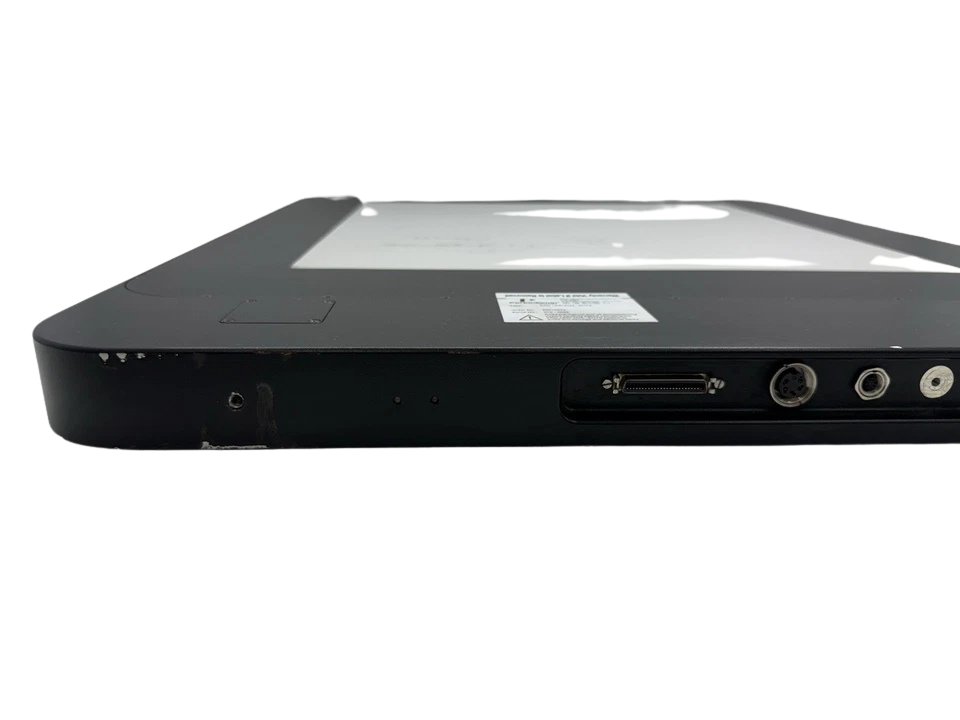
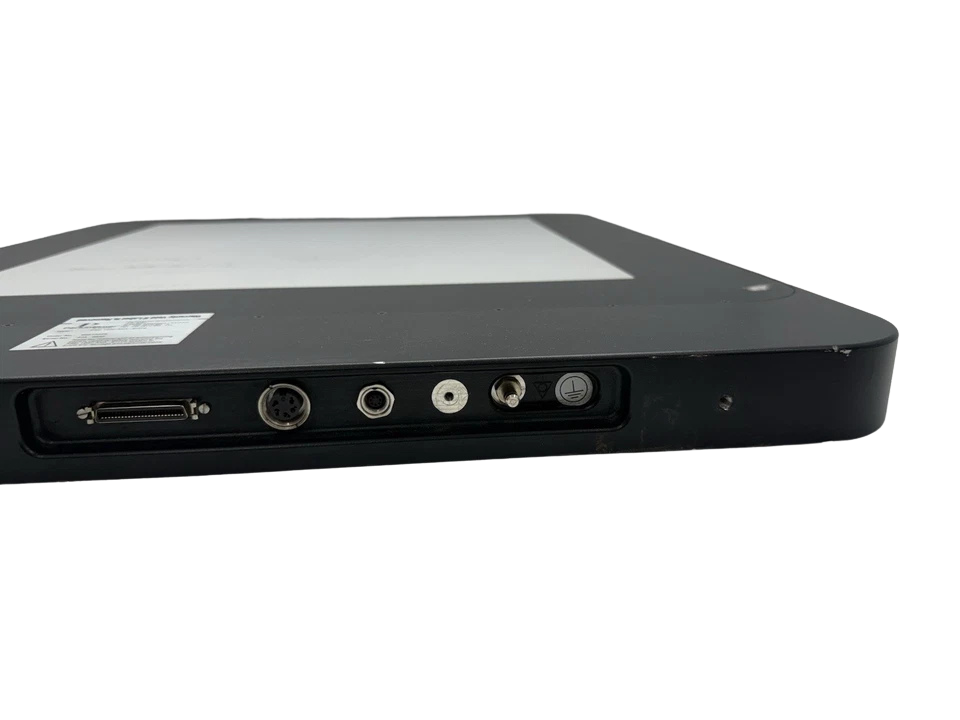
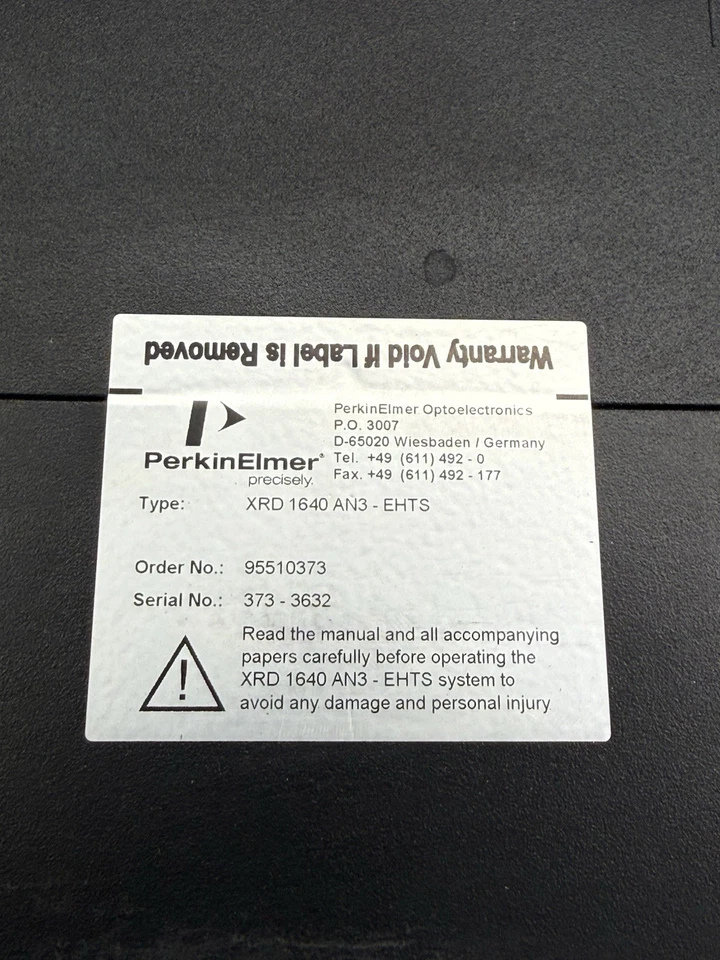


Perkin Elmer XRD 1640 AN3-EHTS 95510373 Digital X-Ray Detector
Condition: New
Country of Origin: Germany

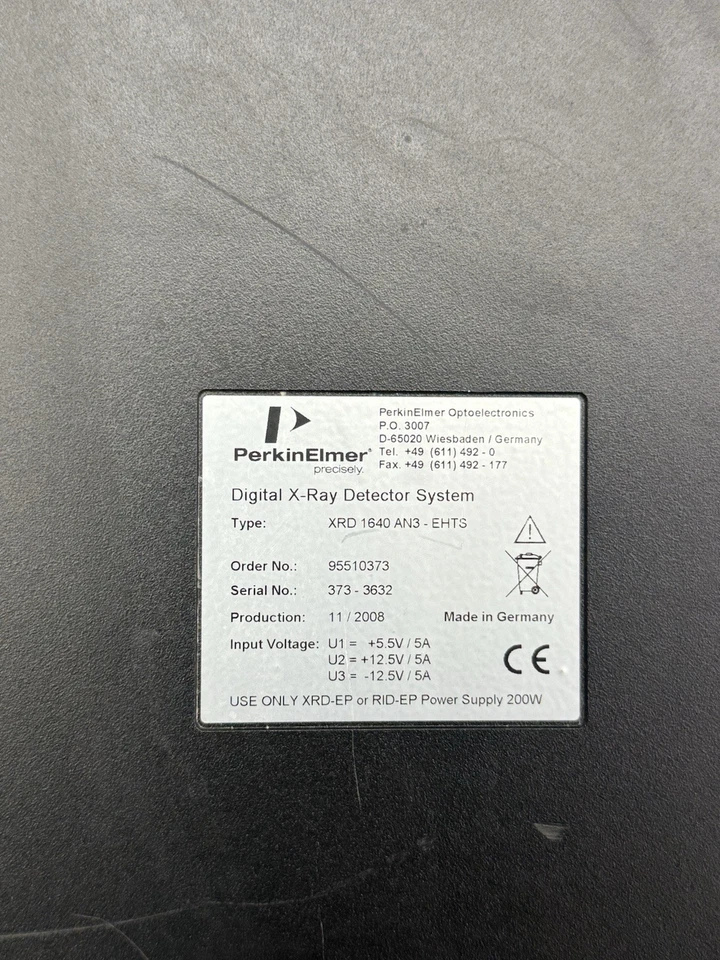
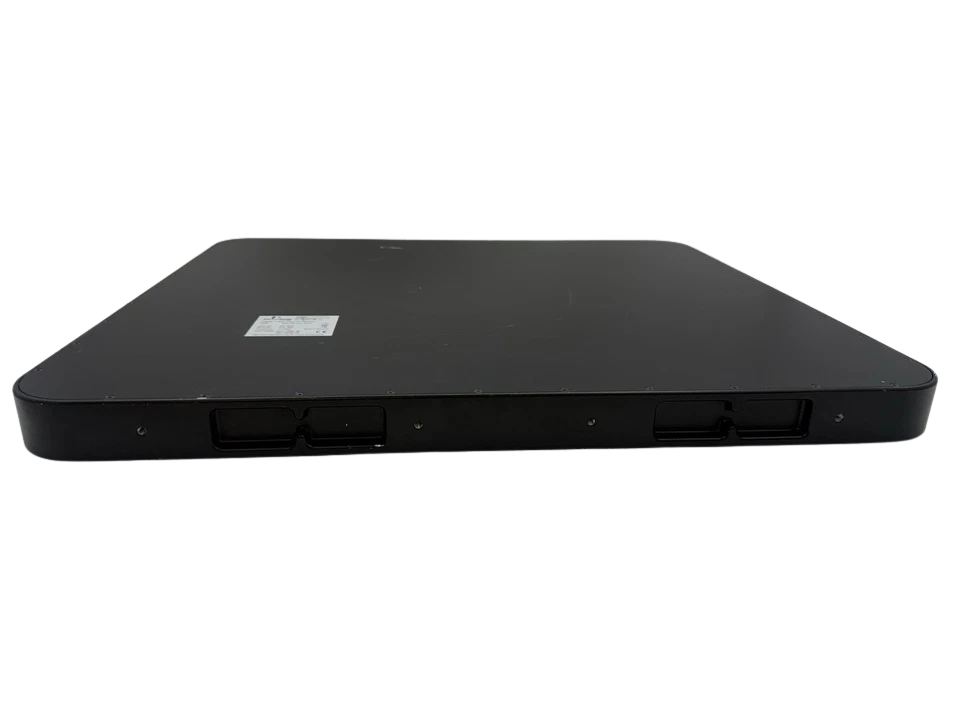
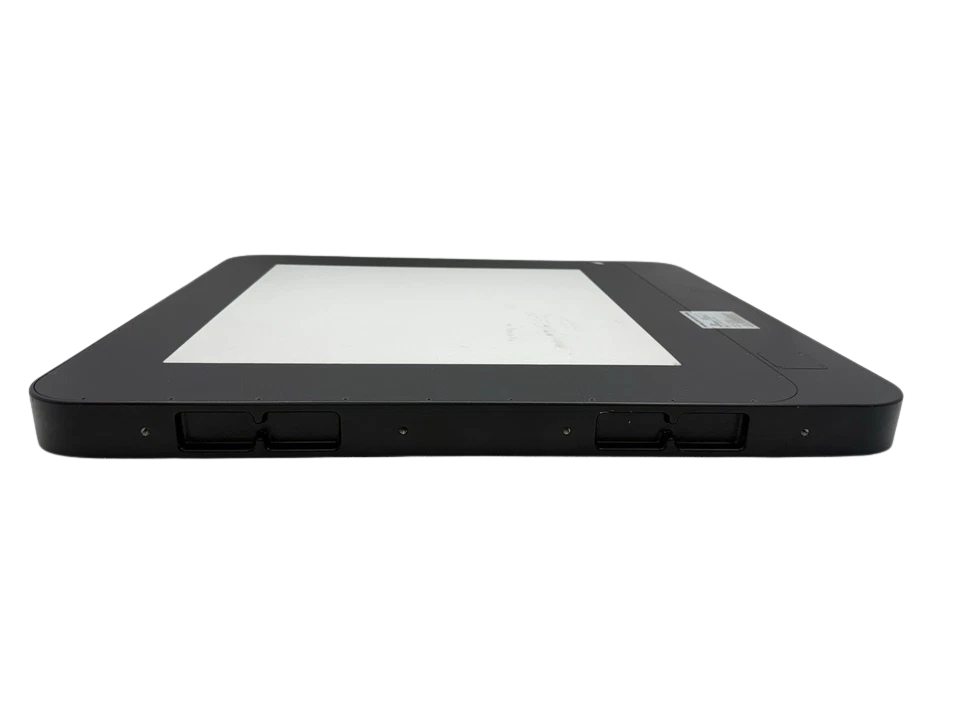
Perkin Elmer XRD 1640 AN3-EHTS (MPN: 95510373) Digital X-Ray Flat Panel Detector System
The Perkin Elmer XRD 1640 AN3-EHTS (Part Number / Order No.: 95510373) is an industrial-grade, large-area amorphous silicon (a-Si) digital flat panel X-ray detector engineered for high-energy radiographic imaging, non-destructive testing (NDT), and radiation oncology radiotherapy simulation.
Featuring an active sensing area of 41 cm × 41 cm (16″ × 16″) coupled to a direct-deposition Cesium Iodide (CsI:Tl) scintillator, the XRD 1640 AN3 architecture delivers high detective quantum efficiency (DQE) and dynamic range across photon energy ranges from 20 keV up to 15 MeV. The integrated 16-bit analog-to-digital converter (ADC) architecture provides 6 software-selectable gain settings, offering contrast resolution and low electronic noise.
Model Details:
- Manufacturer: PerkinElmer Optoelectronics (Varex Imaging)
- Model Code: XRD 1640 AN3-EHTS
- XRD: X-Ray Detector Flat Panel Series
- 16: 16″ × 16″ (approx. 410 mm × 410 mm active area)
- 40: 400 µm native pixel pitch
- A: Standard entrance window housing
- N: 16-bit ADC architecture with 6 programmable gain settings
- 3: Direct-deposition Cesium Iodide (CsI) scintillator screen
- EHTS: Enhanced High-Throughput / High-Sensitivity hardware configuration
- Order Number / MPN: 95510373
Features
- Large-Format Direct Imaging Area: 410 mm × 410 mm (16″ × 16″) active detection matrix eliminating geometric distortion and optical coupling losses inherent in conventional image intensifier / lens systems.
- Cesium Iodide (CsI) Needle-Structure Scintillator: Direct-deposited thallium-doped CsI channels light directly into the amorphous silicon photodiode array, maximizing spatial resolution and light yield at low dose thresholds.
- Wide Energy Response (20 keV to 15 MeV): Engineered to withstand high cumulative radiation exposure while supporting low-kV microfocus electronics imaging up to high-MV linear accelerator inspection.
- True 16-Bit A/D Dynamic Range: 16-bit low-noise digitizer with 6 programmable gain states enables fine soft-tissue and heavy-density contrast separation.
- Optically Isolated / Low-Noise Interfacing: Interfaces via shielded copper or optical serial high-speed link with optocoupled external trigger I/O for hardware-synchronized frame acquisition.
Technical Details
| Parameter | Engineering Specification |
|---|---|
| Manufacturer & Model | PerkinElmer Optoelectronics / XRD 1640 AN3-EHTS |
| Manufacturer Part Number (MPN) | 95510373 |
| Sensor Technology | Hydrogenated Amorphous Silicon (a-Si:H) Photodiode Array with Thin Film Transistor (TFT) readout matrix |
| Scintillator Screen | Thallium-doped Cesium Iodide (CsI:Tl), high-resolution needle structure, direct deposition |
| Active Image Matrix | 1024 × 1024 pixels (native 400 µm) / supports multi-mode binning |
| Active Detection Area | 409.6 mm × 409.6 mm (approx. 16.1 in × 16.1 in) |
| Pixel Pitch | 400 µm × 400 µm |
| Digitization / Dynamic Range | 16-bit ADC (65,536 grayscale levels), >84 dB dynamic range |
| Programmable Gain Settings | 6 user-selectable charge amplifier gain levels via software command register |
| X-Ray Photon Energy Range | 20 keV to 15 MeV |
| Frame Rate Acquisition | Up to 15 frames per second (fps) at full resolution (1024 × 1024) |
| Trigger & Synchronization I/O | External BNC/Terminal hardware trigger (LVTTL / Optocoupled 5V pulse) and Internal Auto-trigger modes |
| Power Input Supply | Direct DC input from external regulated XRD-EP power supply: +5.5 VDC @ 5.0 A (Digital & Logic circuits) +12.5 VDC @ 5.0 A (Analog charge amplifiers) -12.5 VDC @ 5.0 A (Analog reference rail) Protected by internal overvoltage and 4A / 250V internal fuse lines |
| Mains Rating (XRD-EP Supply) | 100–240 VAC, 47–66 Hz, 3.3 A max, 200 Watts input |
| Terminal Allocations & Pinout | DC Power Connector: Multi-pin circular military-spec connector (Pin 1: +5.5V, Pin 2: +12.5V, Pin 3: -12.5V, Pin 4: GND Logic, Pin 5: GND Analog, Pin 6: Shield/Chassis PE, Pins 7-10: Voltage Sensing Lines) Trigger Interface: Isolated differential trigger in/out BNC/micro-D terminals Data Link: Dedicated high-speed parallel differential (Cu) / Fibre-optic PCI-interface link to XRD-FG Frame Grabber |
| Chassis Grounding | Dedicated M4 protective bonding stud for potential equalization (PE) earth grounding |
| Operating Environmental Limits | Temperature: +10°C to +35°C (Recommended +15°C to +30°C for stable dark calibration) Relative Humidity: 30% to 70% non-condensing Atmospheric Pressure: 800 to 1250 hPa |
| Storage / Transit Limits | Temperature: -10°C to +50°C; Humidity: 10% to 80% non-condensing; Shock: 20g (11 ms duration) |
| Physical Dimensions & Weight | Approx. 600 mm × 670 mm × 44 mm; Weight: approx. 18.5 kg (40.8 lbs) |
Compatibility
- Frame Grabber Boards: Compatible with PerkinElmer XRD-FG PCI and PCIe acquisition boards, Matrox Solios / Radient frame grabber architectures, and National Instruments Camera Link bridges with OEM configuration bitfiles.
- Power Supply Unit: Exclusively driven by the PerkinElmer XRD-EP Power Supply (MPN: 95510254). Requires regulated multi-rail supply cables:
- 16.5 ft (5.0 m) DC Cable: 95510323
- 25.0 ft (7.6 m) DC Cable: 95510321
- 50.0 ft (15.2 m) DC Cable: 95510322
- 100 ft (30.5 m) DC Cable: 95510324
- Software Interfaces: Compatible with PerkinElmer XIS (X-Ray Imaging Software) library, C++ / .NET SDK DLLs, LabVIEW VI blocks, and EPICS areaDetector drivers.
- X-Ray Source Interoperability: Works with industrial X-ray sources from Comet Technologies, Varian/Varex, Spellman, Gulmay, and linear accelerators from Varian (Linatron series) or Siemens Mevatron/Artiste.
Applications
- Automated Defect Recognition (ADR): High-speed production line NDT for thick cast metal components, automotive powertrain blocks, and turbine blades.
- High-Energy Pipeline & Weld Radiography: High-voltage (up to 15 MeV) weld penetration verification for heavy-wall process piping, subsea manifolds, and pressure vessels.
- Aerospace Composite Inspection: Non-destructive delamination analysis and core-crush screening in carbon-fiber structures.
- Oncology & Radiation Therapy Simulation: Radiotherapy patient positioning verification and megavoltage portal imaging (EPID) on high-energy LINAC gantries.
- 3D Cone-Beam Computed Tomography (CBCT): High-speed volumetric reconstruction scanning for dense specimens.
- Electronics & Semiconductor Packaging: Multi-layer circuit board (PCB) internal via, solder ball array (BGA), and hermetic seal validation.
Frequently Asked Questions
What is the primary difference between the PerkinElmer XRD 1640 and XRD 1620 series?
The primary difference is the native pixel pitch and matrix resolution. The XRD 1640 series features a 400 µm native pixel pitch with a 1024 × 1024 active matrix, optimized for ultra-high sensitivity, high dynamic range, and fast frame acquisition. The XRD 1620 series features a 200 µm pixel pitch with a 2048 × 2048 matrix, delivering higher spatial resolution at lower frame rates.
Can the XRD 1640 AN3-EHTS handle high-energy radiation from a linear accelerator (LINAC)?
Yes. The XRD 1640 series is radiation-hardened and rated for energy levels from 20 keV up to 15 MeV. It is widely deployed in MV industrial CT, aerospace casting inspection, and oncology radiotherapy portal imaging. For continuous MeV-level operation, proper beam collimation and beam-hardening filters (such as copper/lead build-up plates) are recommended to prolong scintillator life.
Which power supply is required to run this detector?
The system requires the genuine PerkinElmer XRD-EP Power Supply (Order No.: 95510254). It provides stabilized +5.5 VDC, +12.5 VDC, and -12.5 VDC rails with active remote sensing lines to prevent voltage drops across extended cable runs.
How do I correct for bad or defective pixels?
During flat-field calibration, our team or your engineering software builds a Bad Pixel Map (.bpm file). Because flat panel arrays naturally have a nominal count of non-responsive pixels, the host software (e.g., PerkinElmer XIS) runs real-time median or nearest-neighbor interpolation to seamlessly replace defective pixels without compromising structural flaw detection.
Does the detector support external hardware triggering?
Yes. The detector supports internal automatic exposure detection as well as external hardware triggering via standard optocoupled TTL input terminals. This enables frame-accurate synchronization with pulsed X-ray tubes, rotational indexing tables, and linear accelerators.