


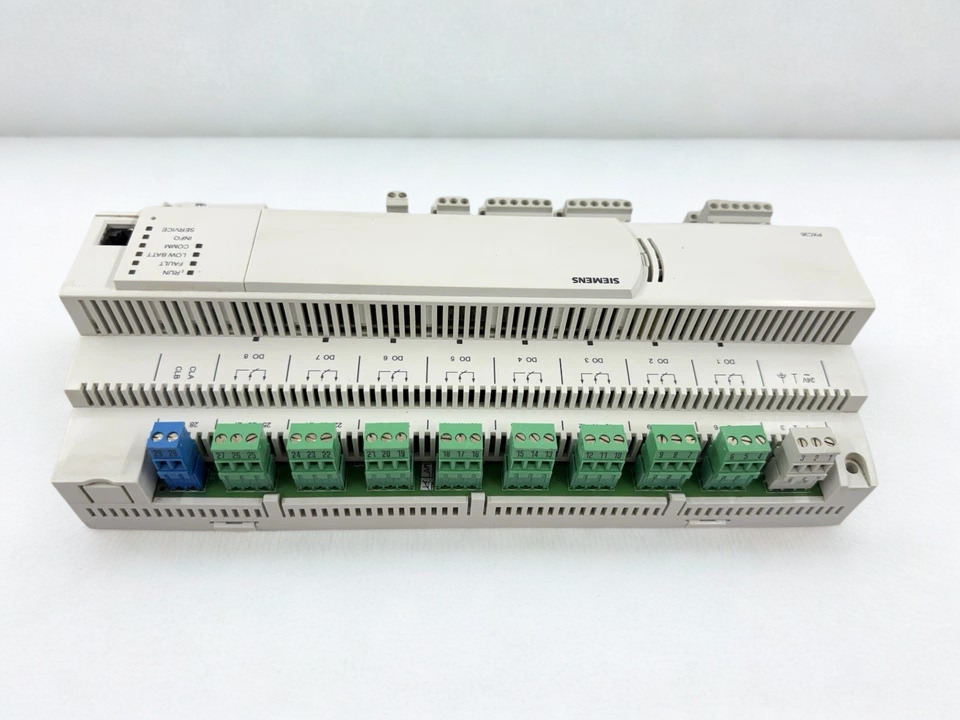
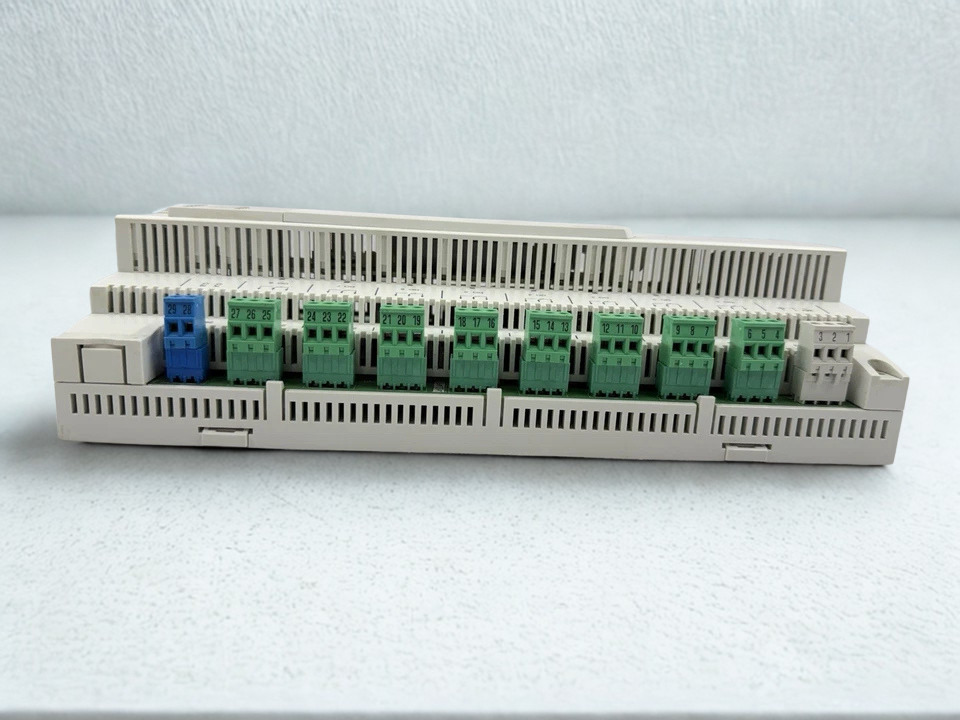
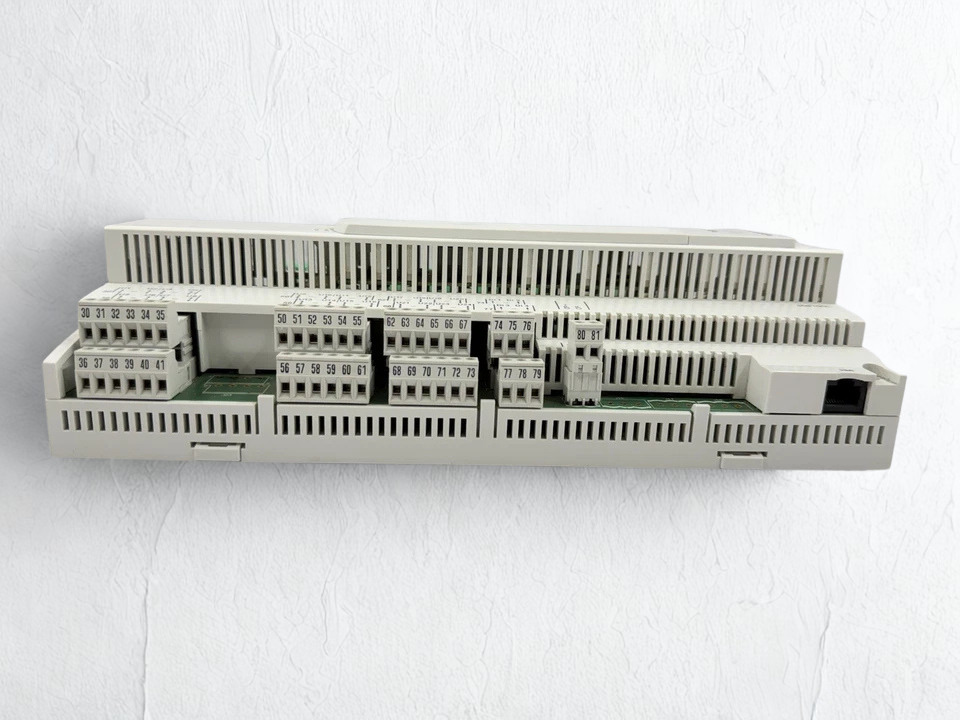
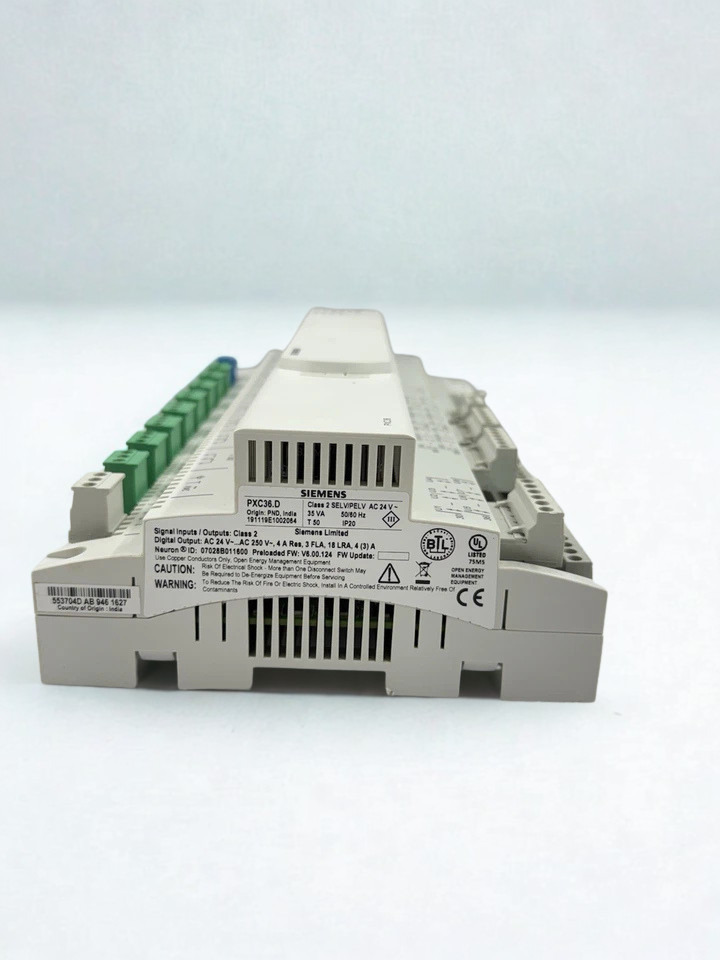




Product Overview
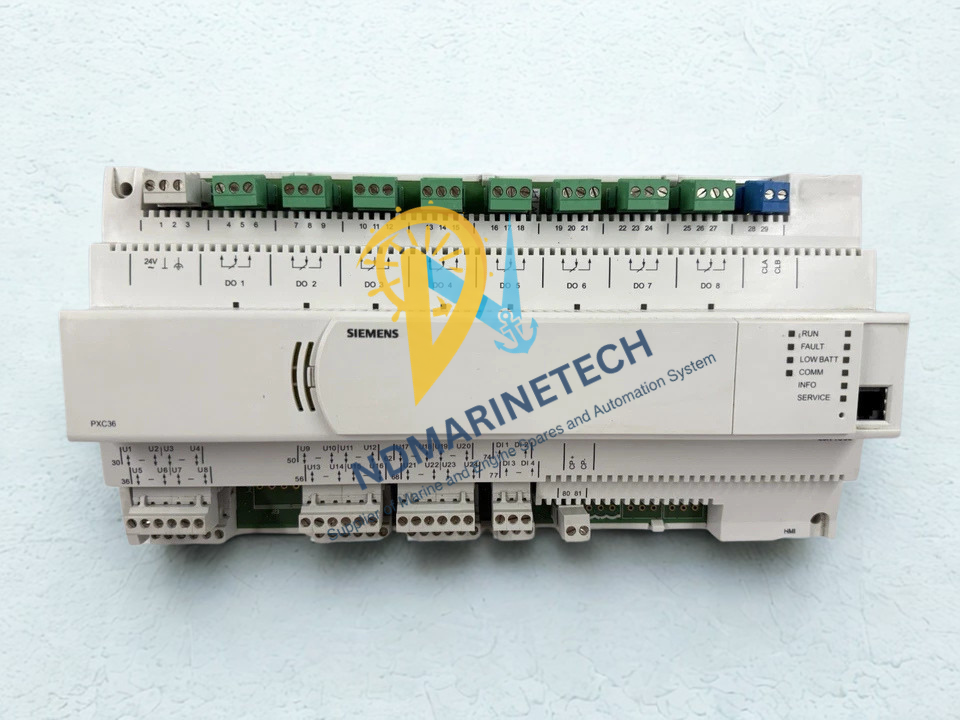
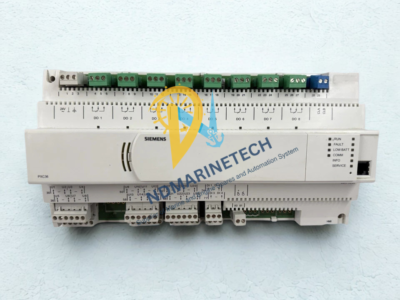
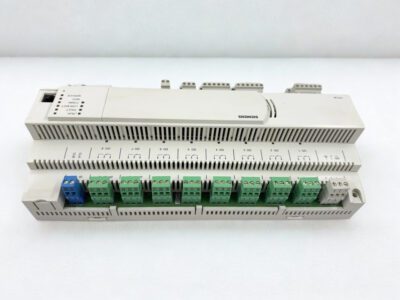
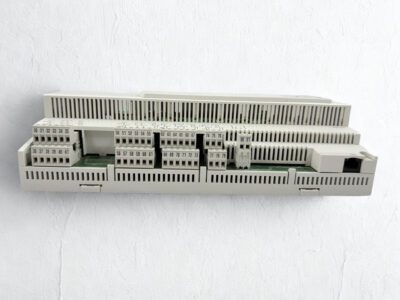
The Siemens PXC36.D is a compact, freely programmable Direct Digital Control (DDC) automation station within the Desigo™ PX series. It operates as a node-level controller responsible for executing field-level control logic, managing 36 physical input/output points, and communicating upstream via the BACnet/LonTalk protocol over a LONWORKS FTT transceiver bus. In a marine or industrial power management topology, the PXC36.D sits between field instruments, temperature sensors (Ni 1000, Pt 1000, T1), digital status contacts, and analog actuator signals and the supervisory management layer.
It integrates directly with LONWORKS-based vessel management systems, feeding measured process variables and executing setpoint commands issued by higher-level controllers such as the Siemens PXG3 BACnet gateway or operator panels like the PXM20. Where a vessel runs a hybrid BMS architecture — for example, integrating with Schneider Electric EcoStruxure or Honeywell building-level supervisors via BACnet/IP gateways — the PXC36.D participates as a BTL-certified B-BC profile device, ensuring protocol interoperability without proprietary middleware.
Technical Specifications
| Attribute | Specification Details |
|---|---|
| Product Model | PXC36.D (Desigo Series) |
| Total I/O Count | 36 (Universal Inputs, Digital Inputs, Analog/Digital Outputs) |
| Operating Voltage | AC 24 V ± 20% / 50/60 Hz |
| Communication Protocol | BACnet on MS/TP (RS-485) |
| Mounting | Standard DIN Rail (35mm) |
| Operating Temp Range | 0°C to 50°C (Tested for sustained engine room ambient air) |
Key Features
- 36-Point Native BACnet/LonTalk Controller: This controller has 36 I/O points built in: 4 digital inputs, 24 universal I/O (which can be set up as analog in/out, Ni/Pt sensor, or binary switching), and 8 PELV-isolated relay outputs.
- It is BTL-certified for BACnet B-BC profile compliance, which means it can work with other vendors’ BAS networks.
- Can hold up to 400 data points: The onboard island bus interface (terminals CS/CD) can handle up to 16 TX-I/O extension points across TXM1-series modules and up to 5 TX Open modules. This means that it can handle a total of 400 addressable data points, which is enough for zoning machinery space in large propulsion machinery compartments.
- The Motorola MPC885 CPU with 64MB SDRAM and 16MB FLASH gives you enough area for complex D-MAP application programs, including alarm routing, multi-scheduler time programs, trend logging, and remote access.
Marine & Industrial Applications
- Vessel HVAC and ventilation control include controlling the temperature of the air that comes into the accommodation decks, the engine room air-handling systems, and the galley exhaust.
- Using Ni 1000 or Pt 1000 sensors connected to UIO channels to keep an eye on the temperature of the cooling water in the machinery space
- Control of the auxiliary boiler and thermal fluid heater by changing the analog outputs to the burner management actuators
- Fire damper and HVAC damper actuator sequencing through relay outputs in fire zone setups that meet SOLAS standards
- Environmental control for LNG carrier cargo machinery space, including monitoring humidity and temperature in compartments that have been purged of inert gas
- Offshore platform accommodation BMS can connect to Honeywell HC900 or Siemens S7 PLCs over a BACnet gateway.
- Automation of shipyard facilities on shore, such as controlling the HVAC and compressed air systems in the drydock workshop
- Control of the climate in cruise ship cabins with QAX room units connected to PPS2 (up to 5 per station)
Role in the Marine Power and Control Ecosystem
The PXC36.D does not operate in isolation — it is one node in a field-level control layer that communicates upstream to an operator station or BACnet gateway. In a typical vessel topology, the unit sits on a LONWORKS segment alongside other PXC compact stations, all of which report to a PXG3.W200-1 BACnet/IP web server or a PXM20 network operator unit. This arrangement mirrors the data highway architecture found in integrated automation systems (IAS) from vendors such as Kongsberg Maritime or Rolls-Royce (now Kongsberg) — where field controllers exchange process data across a common backbone.
The PXC36.D’s D-MAP application program executes the local control algorithm autonomously; supervisory commands from the IAS simply write BACnet object property values (Present_Value of Command objects), and the station executes them against its own scan cycle without dependency on network health. This peer-level autonomy is what distinguishes a true DDC automation station from a simple remote I/O expansion module.
Pro-Engineer Tips
Every chief engineer who has dealt with a failed automation station mid-voyage knows that the real cost is not the hardware; it’s the cascade effect. The PXC36.D controls relay outputs that drive fan starters, valve actuators, and heating elements. If the station loses its D-MAP application due to a battery-backed SDRAM failure during a power interruption, all relay outputs default to the de-energised (open) state. On a ventilation system, that means dampers fail closed.
On a chilled water circuit, pumps stop. The system-wide solution is to commission the PXC36.D with explicit BACnet Out-of-Service flags and Relinquish-Default property values set to the fail-safe position for each output object, not the de-energized position. This requires deliberate configuration in Desigo Xworks Plus at commissioning time, not as an afterthought.
Additionally, pair the PXC36.D’s island bus TX-I/O output modules with a TXS1.12F10 power supply module on a separate 24V circuit from the main station supply; if the automation station loses power, the TX-I/O modules hold their last commanded state rather than dropping. These two measures — fail-safe output defaults and segregated TX-I/O supply — transform the PXC36.D from a single point of failure into a fault-tolerant subsystem node consistent with IEC 61511 SIL2 architectural intent.