

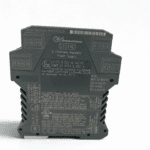
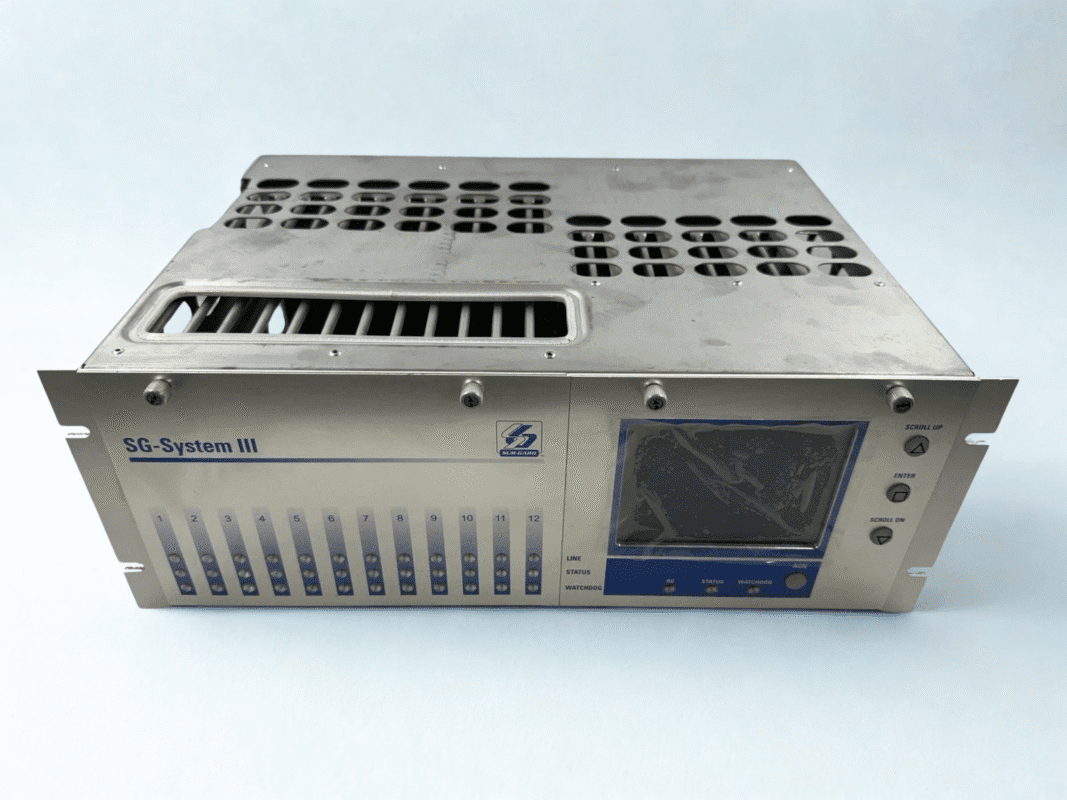
DSC Sur-Gard SG SYSTEM III Central Station Receiver
$4,299.00
Condition: New – Box Open
1 in stock

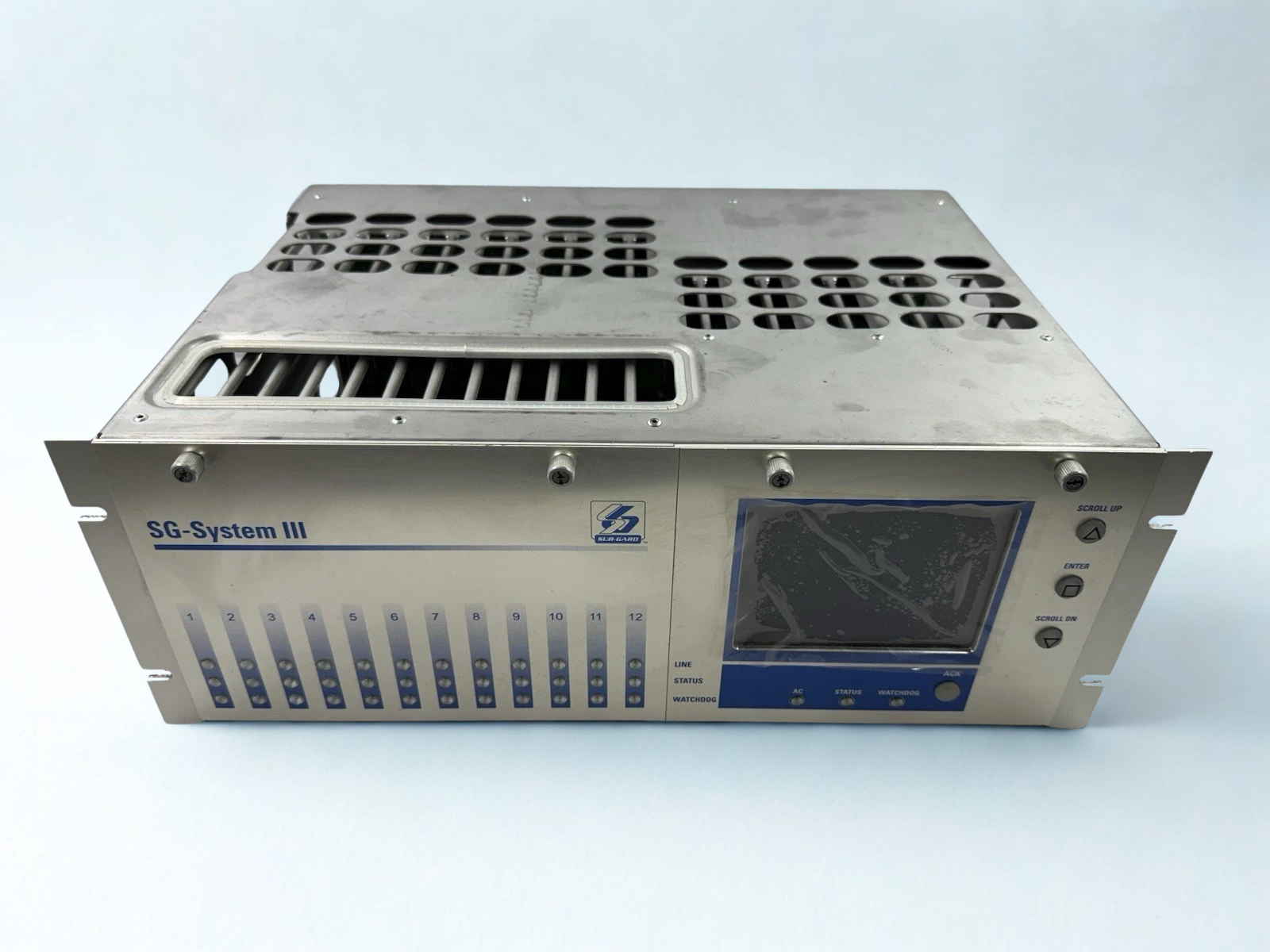
The DSC Sur-Gard SG SYSTEM III Central Station Receiver is a high-availability, rack-mounted virtual receiver platform designed for large-scale industrial, commercial, and high-security monitoring networks. Built for zero-downtime environments, the SG-SYSTEM III bridges legacy PSTN dial-up lines and modern encrypted IP alarm communications into a single integrated platform.
Its core architecture relies on dual-cabinet configurations providing instantaneous, auto-switching redundancy across Central Processor Modules (CPMs) and concurrent dual load-sharing power supplies. By utilizing digital signal processing (DSP), the receiver expands bandwidth efficiency, handles over 120 communication formats, and significantly lowers online processing times via predictive handshake routing.
System Function and Capacity
The SG-System III is a Class 1, fixed, rack-mounted receiver that can hold several SG-DRL3/SG-DRL3-2L telephone line cards and SG-DRL3-IP IP line cards. A completely set up system can usually accommodate up to 24 line cards per receiver. These line cards can work with both dial-up phone lines and IP communication channels. Each line card can monitor several alarm accounts using up to 64 pre-programmed forms (profiles) per card.
The receiver adds time and date stamps to all incoming alarm data. It can send events to central station automation by TCP/IP or RS-232, to a printer that is nearby or far away, and to the front-panel LCD display so the operator can see them.
Types and Aspects of Communication
Each SG-DRL3 family line card can send alarms in a number of various ways, like Contact ID and SIA. You can also program it with a lot of different handshakes for each profile to make sure it works with a lot of different control panels. The System III has patented features like automatic handshake selection (AHS), caller ID, ANI/DNIS reception, and advanced two-way audio integration.
These features help central stations identify callers, choose the right format, and support audio verification when used with compatible field devices. The system can also make and record test signals between receivers in the same monitoring center and transmit test messages to check that the communication pathways are working.
Redundancy and Hardware Architecture
The SG-SYSTEM III is a modular 19-inch rack system with hot-swappable cards. This means that you may change out line cards, CPUs, and power supply modules without turning down the system or losing receiver capacity. Each rack can store up to 12 line cards and their modules.
Configurations can include extra receivers and power supplies for high availability, with automatic switching redundancy and continuous connection supervision (heartbeat) between the receiver and the central automation servers. Each line card has non-volatile memory that keeps configuration data and event buffers (usually hundreds of events per card) so that alarms stay on even if the power goes off.
Information about the electrical and installation
The SG-System III usually gets its power from a universal AC input of around 110–240 VAC, 50/60 Hz, with a maximum input current of about 2.5 A and a power usage of about 25 W per rack. It is also sometimes backed up by an external UPS for standby operation.
It is classified as plug-in, stationary equipment that must be securely fixed in a rack and installed in accordance with electrical codes and relevant UL/ULC standards such as UL 1610 (Central Station Burglar Alarm Units), UL 864 (Fire Alarm Systems), UL 827 and CAN/ULC‑S304/S561 depending on the application and region.
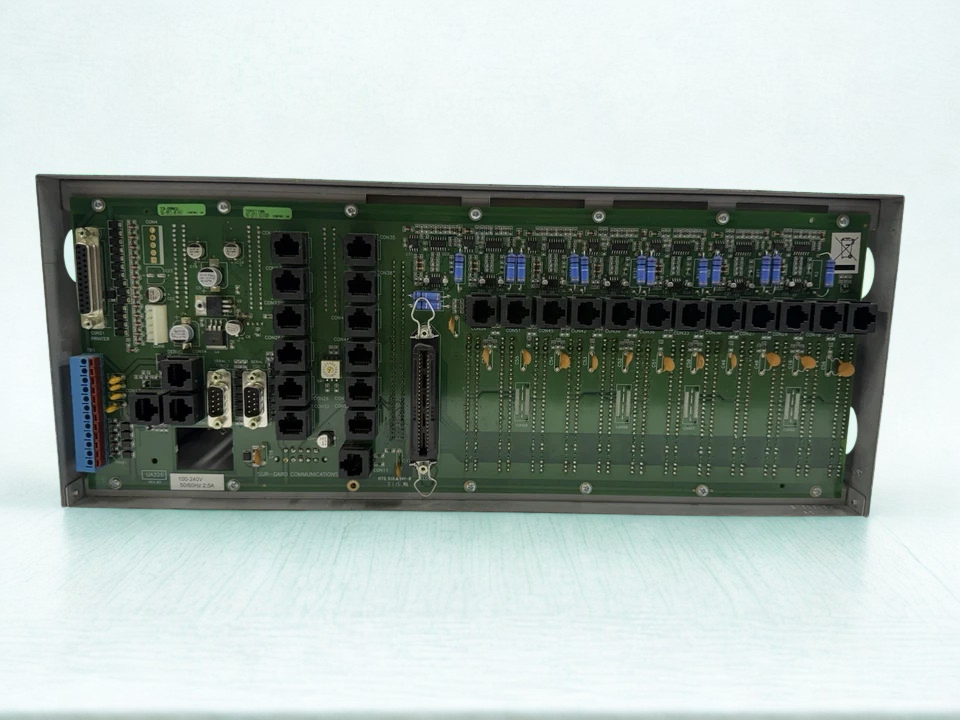
The front panel has a quarter-VGA or big LCD screen and navigation buttons for programming and checking the status locally. The back panel has connectors for a parallel printer, numerous RS-232 serial ports, and 10/100Base-T Ethernet for automation and remote setup.
Supervision, monitoring, and approvals
The receiver keeps an eye on phone lines and IP links all the time, logging and reporting line failures, network problems, and disconnects to the LCD, printer, and automation software so that operators may respond promptly.
When used with appropriate DSC/T-Link communicators, it can handle static IP addressing and encrypted IP communications. It can also work in a data network polling environment that meets strict 90-second supervision requirements for some ULC applications.
The SG-SYSTEM III is listed and approved for use as central station receiving equipment in both fire and burglary alarm monitoring. It meets CE EMC and low-voltage directives as well as North American listing standards. This makes it a good choice for professional monitoring centers that need a lot of capacity, redundancy, and compliance with the law.
Terminal Allocation and Wiring Checklist
- AC Mains Input: Ensure proper grounding directly to the chassis ground lug on the SG-MLRF3 rack frame. Fluctuating ground differentials can introduce line noise into the analog PSTN line card modules (SG-DRL3), causing intermittent handshake failures.
- Battery Backup Isolation: Because the system draws dedicated power via the dual SG-PSU3 modules, place the entire receiver rack behind an online double-conversion Uninterruptible Power Supply (UPS). This filters out transient harmonic distortions typical of heavy machinery or standby generator switchovers.
Applications
- Commercial Central Monitoring Stations: Managing high-volume commercial fire, life safety, and intrusion signaling processing.
- Industrial Infrastructure Supervision: Continuous remote telemetry monitoring across distributed processing networks, substations, and marine terminal control centers.
- High-Security Network Supervision: Tactical asset protection requiring encrypted active communication channels (ULC levels A1-A4).
- Legacy-to-IP Systems Transitions: Serving as a hybrid bridge for monitoring facilities replacing physical analog phone switch networks with WAN/LAN pathways.
Automation & Central Station Software
- Surgard Console Software (Version 2.30 or higher)
- Standard monitoring software applications accepting Surgard MLR2-DG protocol strings via RS-232 serial or native TCP/IP socket structures.
Compatible Communicator Modules
- DSC PowerSeries IP/GSM Communicators: TL250, TL300, TL260, TL260GS, GS2060
- DSC PowerSeries Pro & Impassa On-board Modules: Communicators linking via proprietary PCLink architecture
- Third-Party Protocols: Licensed hardware partners outputting standard SIA or Contact ID over IP/PSTN networks
Pro Tip for Active Channels:
Troubleshooting IP Account Polling: If you have a lot of ‘Disconnect Trouble’ events on incoming SG-DRL3-IP line cards, then verify the supervision window settings in the T-LINK or Surgard Console environment. If you have high-security installations at ULC active monitoring levels, you should make sure your network switch settings give priority to the receiver’s MAC address using Quality of Service (QoS) protocols. This avoids dropping UDP polling packets down below the key 90 second supervision window on big volume data bursts on the local network.